conference

CITA ADAS Task Force Meets in Radeberg


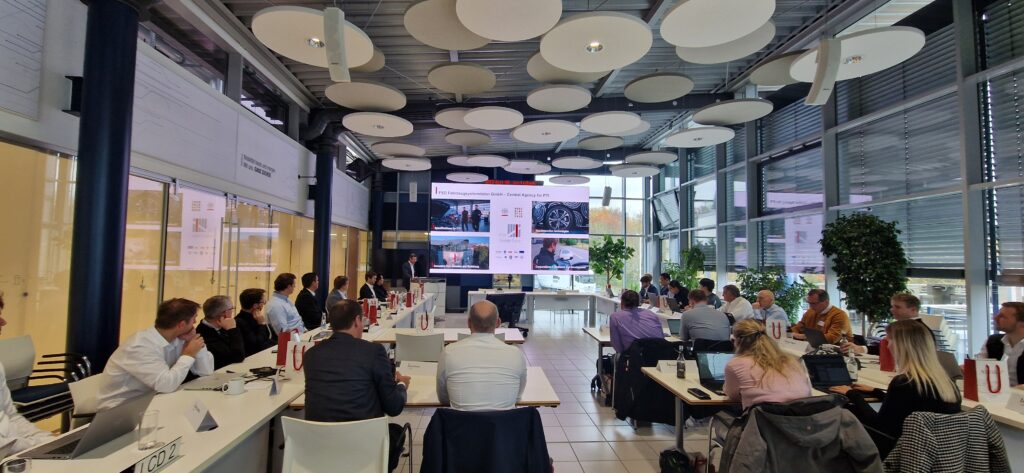
11–12 November 2025, Radeberg (Germany). The CITA ADAS Task Force convened for a two-day in-person meeting hosted by FSD Fahrzeugsystemdaten GmbH at their headquarters in Radeberg.

With representatives from Europe and abroad, the meeting focused on deepening the technical discussion on how Advanced Driver Assistance Systems (ADAS) can be effectively assessed within PTI, and on sharing the latest innovations, insights, and test concepts currently emerging across the sector.

The agenda was structured over two intensive days, combining strategic presentations, technical demonstrations, and open exchanges between the participating CITA members.

The first day opened with a welcome session and a brief introduction to the objectives of the CITA ADAS Task Force, followed by a sequence of contributions outlining the growing need for PTI-relevant ADAS assessment methods.

Key Highlights:

  • TRL – Collaborative Project on ADAS in PTI / TRL introduced a new collaborative initiative examining whether — and how — ADAS functions should be included in PTI. The project aims to evaluate practical, reliable, and safety-oriented methods for integration into inspection procedures, ensuring regulatory preparedness as ADAS penetration increases.
  • MUSTANG – New ADAS Testing Solution Concept / The MUSTANG team presented an innovative ADAS testing solution concept, designed to simplify real-world function evaluation through a structured, modular approach. The concept sparked significant discussion on technical feasibility and PTI integration.
  • FSD + DEKRA – Joint Presentation on Dynamic Target Evaluation & Sensor Misalignment / FSD and DEKRA provided a combined update on their ongoing research into dynamic target testing. Initial results on sensor misalignment assessment highlighted both the complexity of the topic and the potential for robust PTI-compatible methodologies.
  • KÜS – Updates on the KÜS Drive Concept / KÜS shared recent developments in the KÜS Drive platform, focusing on new capabilities relevant to ADAS function verification. Improvements in efficiency and reproducibility drew positive feedback from participants.
  • MAHA – Vehicle-in-the-Loop (VIL) ADAS Testing / MAHA presented the latest updates to its Vehicle-in-the-Loop concept, which enables ADAS function testing in a controlled but realistic environment. The approach generated interest due to its potential compatibility with existing PTI infrastructure.

The first day concluded with an open technical exchange, allowing participants to compare methodologies, identify common needs, and explore opportunities for joint development.

The second day built on the previous discussions, shifting focus toward concrete testing solutions, practical demonstrations, and the global landscape of ADAS assessment.

Key Highlights:

  • Rohde & Schwarz – R&S®RadEsT Radar Essential Tester & Demo / Rohde & Schwarz demonstrated their Radar Essential Tester, providing participants with a hands-on demonstration of target simulation and measurement functions. The session gave valuable insight into emerging radar testing technologies.
  • ÖAMTC – Analysis of ADAS Malfunction Impacts / ÖAMTC shared findings on the safety impact of malfunctions in key ADAS systems, reinforcing the need for periodic verification of critical functionalities to maintain road safety and driver trust.
  • KOTSA – Korea’s KADAS Assessment System / Representatives from KOTSA introduced the Korea Automated Driving Vehicle Assessment System (KADAS), providing concrete examples of national-level ADAS performance evaluation and sharing promising results and lessons learned.
  • DÜRR – Updates on x-proof 360 and PTI Applications / DÜRR presented the evolution of the x-proof 360 technology and its potential application in PTI contexts, highlighting precision, repeatability, and the expanding capability of automated inspection tools.
  • GTÜ – Concept Presentation & Live Demo / GTÜ outlined its ADAS testing concept and performed a live demonstration, delivering a practical perspective on how inspection stations might integrate ADAS checks in the future.
  • DEKRA – Targeted and Efficient ADAS/AD Testing in PTI / DEKRA closed the technical sessions with a proposal for a structured and efficient approach to verifying ADAS and Automated Driving (AD) functions during PTI. The concept emphasized risk-based prioritisation and the use of objective, repeatable test methods.
The meeting in Radeberg reaffirmed the commitment of CITA and its members to prepare for the safe integration of ADAS into PTI frameworks worldwide. With vehicle technologies evolving rapidly, the Task Force continues to play a central role in ensuring that inspection procedures remain relevant, effective, and aligned with real-world safety needs.

CITA extends its sincere thanks to FSD for hosting the event, to all participant organizations for their valuable contributions, and to the Task Force members for their ongoing dedication.


CITA Conference on Emissions Tampering


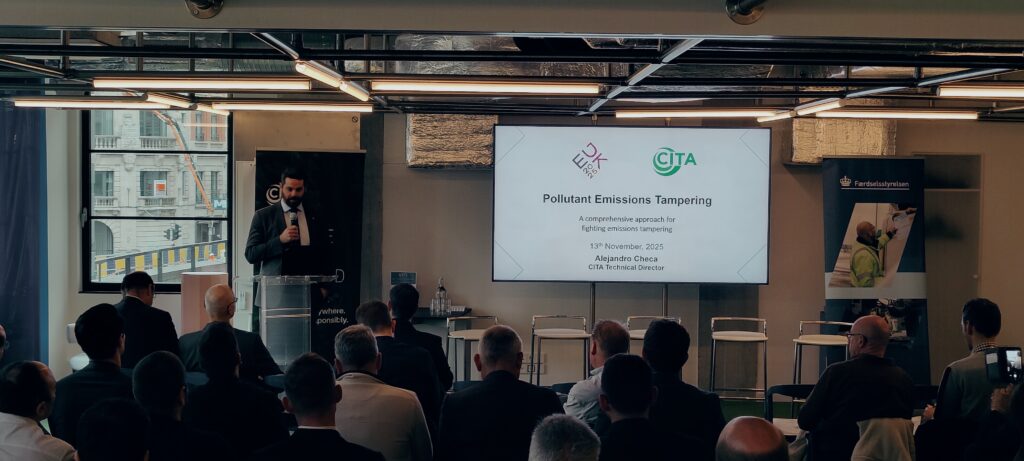
Brussels, 13 November 2025 — CITA, in collaboration with the Danish Presidency of the Council of the European Union, successfully held the conference “A Comprehensive Approach to Fighting Emissions Tampering” at SPARKS, Brussels. The event brought together representatives from European institutions, authorities, inspection bodies, and technical experts to address one of today’s most critical challenges in vehicle compliance and environmental protection: emissions tampering.

The conference opened with welcoming remarks from Gerhard Müller, President of CITA, and Stefan Jøker Søsted, Director General of the Danish Road Traffic Authority.

In his address, Gerhard Müller underscored the moral and regulatory urgency of addressing tampering: “Tampering is not a mechanical glitch—it is a human decision that undermines fairness, safety, and environmental responsibility,” he stated. “Our inspectors cannot fight blindfolded. They must have full, secure, and standardized access to vehicle data to carry out their duty in the public interest.”

He praised Denmark’s leadership in the field and highlighted the need for Europe’s revised roadworthiness framework to empower authorities through data access, transparency, and harmonized technical standards.

Stefan Søsted extended a warm welcome on behalf of the Danish Presidency, thanking CITA for its initiative and partnership. He emphasized that cooperation and innovation are essential to achieving Europe’s green and competitive goals: “By joining forces, we are sending a clear message — that transparency, accountability, and innovation must lead the way,” Søsted noted.

He introduced Denmark’s key priorities under its Presidency — promoting a secure, competitive, and green Europe — and presented the Roadworthiness Package as a major step toward improving road safety and environmental compliance. Søsted also showcased Denmark’s pioneering use of plume chasing and OBD-based roadside inspections, illustrating how targeted enforcement and advanced technology can effectively detect tampering.

Following the opening session, the conference featured a series of high-level technical presentations highlighting practical enforcement tools and new regulatory approaches:

  • Signe Shim and Jens Maegaard from the Danish Road Traffic Authority shared Denmark’s anti-tampering initiatives, including plume chasing, particle number measurements, and OBD data analysis. Their findings confirmed that tampered or defective vehicles can emit up to 40 times more NOx or particulates than compliant ones, demonstrating the efficiency of these inspection methods in real-world enforcement.
  • Herbert Woopen from Opus Inspection presented the company’s advanced remote sensing technology, now recognized as a cornerstone of the proposed EU Roadworthiness Package. He detailed how remote sensing devices can identify high emitters in real time, supporting cross-border enforcement and efficient resource allocation across the EU.
  • Víctor Salvachúa from Applus+ showcased Spain’s experience in periodic technical inspection (PTI) of mopeds, demonstrating how coordinated testing for light vehicles contributes to the detection of tampering and improved air quality.
  • Alejandro Checa, CITA Technical Director, concluded the technical segment with a comprehensive overview of tampering across vehicle systems and regulatory frameworks. He underlined that tampering detection depends on inspection capability, training, and cooperation between authorities, manufacturers, and inspectors, and that the integration of Type Approval, In-Service Conformity, PTI, and COP processes is crucial for effective enforcement.

An engaging panel discussion followed, allowing participants to exchange best practices and explore synergies between national and EU-level approaches. Speakers and attendees alike agreed on the necessity of a coordinated, data-driven strategy that bridges the gap between legislation, enforcement, and inspection.


CITA RAG Africa 25: Time for Action in Zanzibar


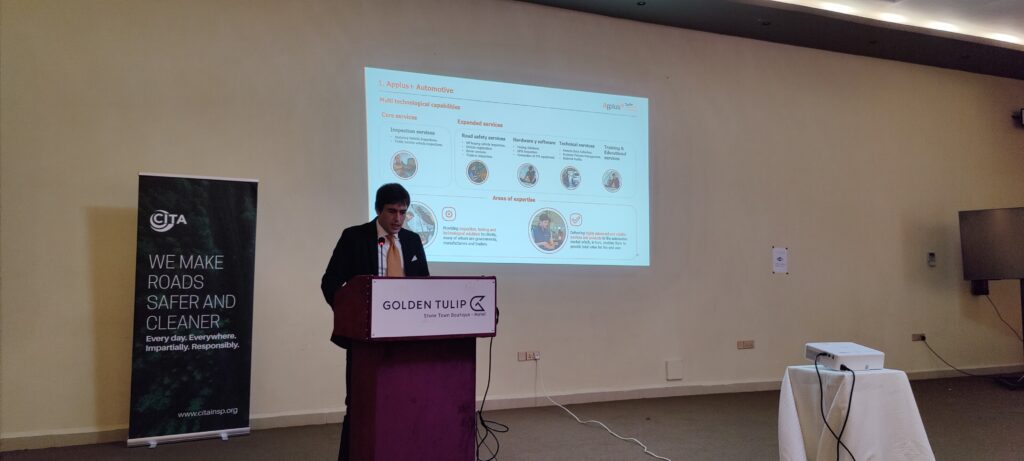
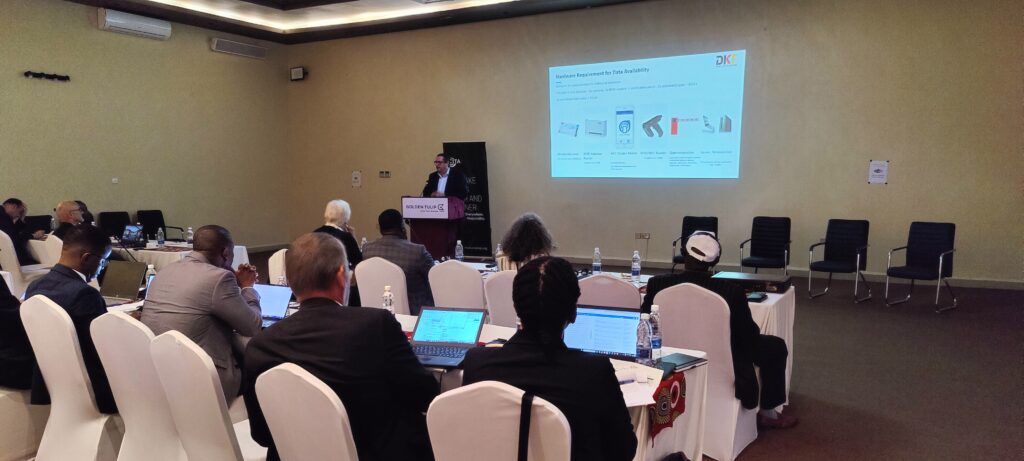
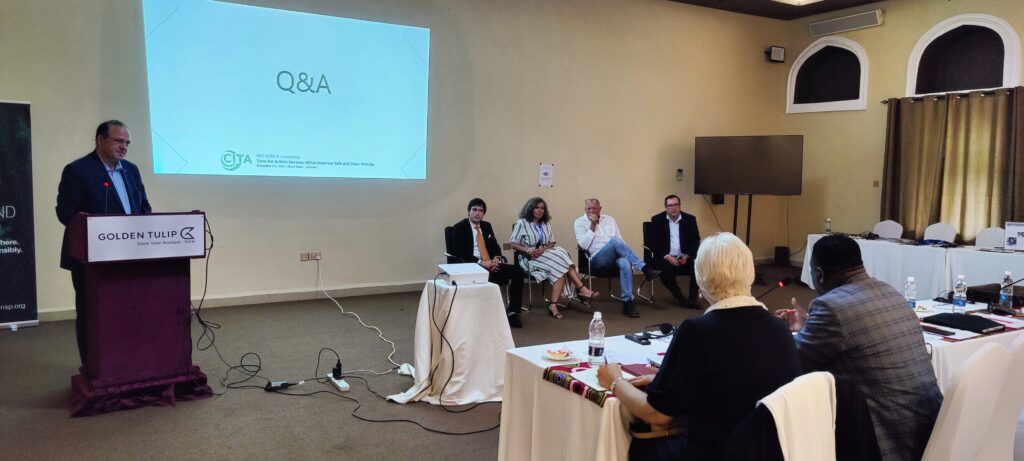
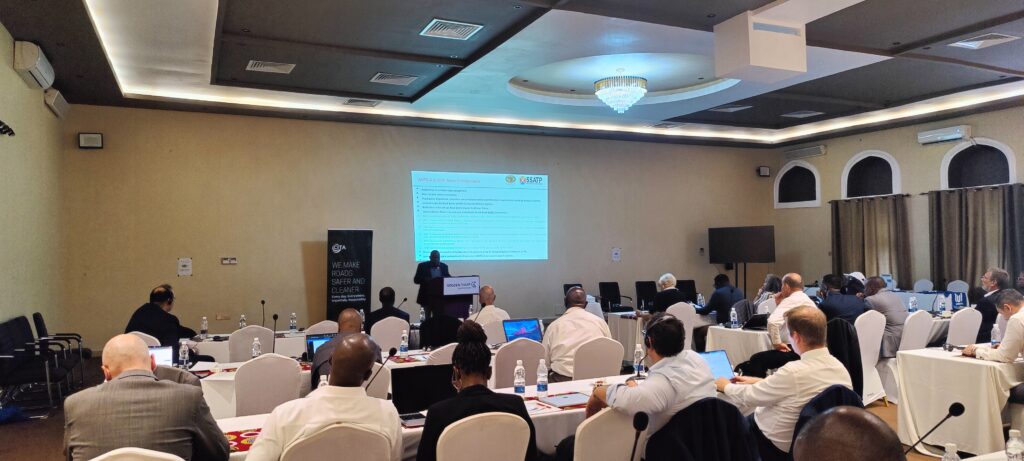
Stone Town, Zanzibar – 4–5 November 2025. The CITA Regional Conference for Africa, themed “Time for Action – Because Africa Deserves Safe and Clean Vehicles,” successfully gathered a wide range of key stakeholders from across the continent and beyond. Held at the Golden Tulip Stone Town Boutique Hotel, the event provided a dynamic platform for dialogue, cooperation, and the exchange of expertise in the field of vehicle regulatory compliance, inspection, and road safety.

Over two days, representatives from governmental authorities, technical services, international organizations, academia, and the private sector came together to discuss the future of vehicle safety and environmental protection in Africa. The conference highlighted the urgent need for harmonized and effective vehicle regulatory schemes, addressing topics such as importation of used vehicles, vehicle inspection systems, homologation procedures, and operational best practices adapted to African realities.

The event was opened by CITA leaders, together with high-level representatives of regional authorities and international institutions. Their addresses emphasized that ensuring the circulation of safe and clean vehicles is not only a technical or economic issue, but also a social imperative for the well-being of African citizens and the sustainability of the environment.

Day 1 focused on strategic and thematic discussions. Participants heard high-level contributions from international organizations, followed by academic insights and practical experiences from African countries already implementing vehicle inspection and registration programs. The importation of used vehicles – a critical issue for the region – received particular attention, with lessons drawn from other parts of the world and successful case studies presented by African experts.
The day concluded with an evening networking dinner, allowing participants to strengthen regional ties and foster future cooperation.

Day 2 was dedicated to practical and operational aspects. In the morning workshop, experts jointly identified the key elements needed to develop effective vehicle regulatory frameworks in Africa, emphasizing the importance of institutional capacity, data management, and transparent governance.
In the afternoon, participants took part in a technical visit to the KWASILVA vehicle inspection site in Zanzibar, where they observed firsthand the operational practices and technologies used locally, and discussed how similar solutions could be adapted elsewhere on the continent.

The conference reaffirmed CITA’s commitment to supporting African countries in developing comprehensive systems for vehicle type approval, inspection, and registration that are efficient, transparent, and aligned with international standards. As one of the key takeaways, participants called for enhanced regional collaboration, sharing of technical expertise, and capacity building initiatives to ensure that Africa can move decisively towards a safer and cleaner vehicle fleet.

On 6 November. CITA President Gerhard Müller and Chair of RAG Africa, Ferose Oaten, had the honor of accepting an invitation from the President of Zanzibar following the CITA RAG Africa Conference held in Stone Town, Zanzibar. President Hussein Mwinyi expressed great interest in hearing their impressions of the ongoing PTI initiatives on the island. The CITA representatives commended the strong political commitment demonstrated in establishing periodic vehicle testing and praised the new Kwasilva Testing Station—an impressive facility that could serve as a model for the rest of Africa.

The success of the 2025 African Regional Conference in Zanzibar underlines that the time for action is now – because Africa truly deserves safe and clean vehicles.


CITA LATAM Conference 2025


More than 100 participants gathered in Santo Domingo, Dominican Republic, for the CITA Regional Advisory Group (RAG) LATAM Conference 2025, held on 21–22 October at the Hotel Sheraton Santo Domingo.

Under the theme “Vehículos más limpios y seguros. Los retos de la revisión vehicular en Latinoamérica y el mundo” (Safer and cleaner vehicles. The challenges of periodic inspection in Latin America and the world), the two-day conference brought together regional authorities, technical experts, and CITA members to exchange knowledge and experiences on how to strengthen vehicle inspection systems across the region.

The event was officially opened by Marcelo Martínez, CITA Chairman for LATAM, together with Gerhard Müller, CITA President, and Milton Morrison, Executive Director of INTRANT, who welcomed participants and emphasized the importance of PTI as a foundation for road safety and environmental protection in Latin America.

Session 1 – PTI as a Tool for Road Safety
Speakers including Eduard Fernández (CITA Executive Director), Wolfgang F. Schulz (Professor and Dean of Executive Studies), Guillermo Magaz (AECA-ITV), and Benoît Lefevre (Inter-American Development Bank) highlighted the essential role of Periodic Technical Inspection (PTI) in reducing accidents, improving vehicle safety, and supporting sustainability goals.

Session 2 – Dominican Republic: Present and Future
Representatives from INTRANT and DGAPP presented the national vision and ongoing projects to modernize vehicle inspection in the Dominican Republic, underlining the country’s commitment to safer roads and lower emissions.

Session 3 – International Experiences in Vehicle Inspection
Institutions from Mexico, Ecuador, and Chile shared successful regulatory and operational models. Presentations by Zirath Hernández, Fernando Amador, and Carlos Román showcased how diverse inspection frameworks can adapt to local realities while maintaining international quality standards.

Session 4 – PTI as a Regional Necessity
Experts such as Wilhem Ponciano (CITA LATAM Consultant), María José Pessano (Fundación Gonzalo Rodríguez), and Karsten Kunckel (AAP – Asociación Automotriz del Perú) discussed the socio-economic benefits of PTI and the remaining challenges to ensure inspection coverage across all Latin American countries.

Session 5 – The Future of PTI: Vehicles, Infrastructure, Technology, and Software
Speakers Edgard Zamora (Safer Journeys LATAM), Xavier Caparrós (CAPATEST), Pieter ter Berg (Pinja Group), and Charly Grondin (Muller Automotive) explored how digitalization, connectivity, and data analytics are transforming the way vehicles are tested and monitored.

Participants was then able to see a portable test lane from VTEQ.

In his closing remarks, CITA President Gerhard Müller reiterated CITA’s commitment to supporting its members in building robust, transparent, and future-oriented PTI systems in Latin America.

The CITA RAG LATAM Conference 2025 demonstrated once again that cooperation and knowledge exchange are key to achieving safer and cleaner mobility worldwide. With strong participation from governments, international organizations, and the private sector, the event reaffirmed Latin America’s vital role in shaping the future of vehicle inspection.


CITA 24th GA : New Members and Leadership Renewed


On 6 May 2025, within the prestigious framework of the CITA International Conference hosted by TÜV TÜRK, the 24th General Assembly of CITA took place in Istanbul. The event marked an important milestone in the association's continued mission to improve road safety and environmental protection through vehicle compliance.

New Members Join the CITA Community
A highlight of the Assembly was the formal admission of new CITA members, reflecting the organization's expanding global reach and influence. The following organizations were officially welcomed into the CITA family (listed in alphabetical order):

  • AUTOTEST GROUP EODD
  • AVILOO
  • CAPATEST
  • CONTROLAUTO
  • DKT
  • EMIRATES GENERAL TRANSPORT AND SERVICE COMPANY
  • Færdselsstyrelsen
  • KNESTEL
  • INSTITUTO DA MOBILIDADE E DOS TRANSPORTES
  • MASVIK
  • PINJA
  • ROHDE AND SCHWARZ
  • SCALE MT
  • VTEQ ( upgraded membership category in Full Corporate Member)
  • ZEMIC

Changes in the CITA Bureau Permanent
Significant updates were made to the CITA Bureau Permanent (BP), the executive body of the organization. Two new members were elected:

  • Mr. Marian Rybiansky, Managing Director and Chairman of the Board of TESTEK a.s., and Chairman of the CITA Task Force on Brakes
  • Mr. Jungsoo Park, Deputy General Manager at the Korea Transportation Safety Authority

Additionally, Mr. Marcin Barankiewicz was elected by the corporate members as the new Corporate Member Representative in the CITA Bureau Permanent. Mr. George Petelet was reconfirmed as the Corporate Member Deputy Representative.

The Assembly also marked a leadership transition, as Mr. Lothar Geilen, a valued CITA Board member since 2013 and Vice President Treasurer since 2017, stepped down due to retirement. CITA expressed its deep gratitude for his years of dedicated service.

Taking up the role of CITA Vice President Treasurer is Mrs. Ferose Oaten, reaffirming her commitment and leadership within the organization.

Composition of the New CITA Bureau Permanent
The new composition of the CITA Bureau Permanent following the 24th General Assembly is as follows:

  • Gerhard Müller – CITA President
  • Aitor Retes – CITA Vice President General Secretary
  • Ferose Oaten – CITA Vice President Treasurer (re-elected)
  • Pascal Buekenhoudt – CITA Vice President Technical Affairs (re-elected)
  • Geert Konings
  • Christoph Nolte (re-elected)
  • Jungsoo Park
  • Marian Rybiansky
  • Jorge Soriano (re-elected)
  • Teemu Toivanen – Public Member Representative

CITA Activity Reports Presented
During the General Assembly, members also had the opportunity to review and discuss several reports highlighting CITA’s recent activities, strategic initiatives, and technical developments. These presentations, made by leaders of CITA RAGs and Topic Areas, underscored the organization’s commitment to continuous improvement and knowledge sharing across the vehicle compliance and road safety sectors.

The Assembly reaffirmed CITA’s role as a leading voice in the vehicle compliance sector, with renewed leadership and a growing, diverse membership ready to tackle global mobility challenges.


CITA Conference 2025: Forging Global Alliances in Istanbul


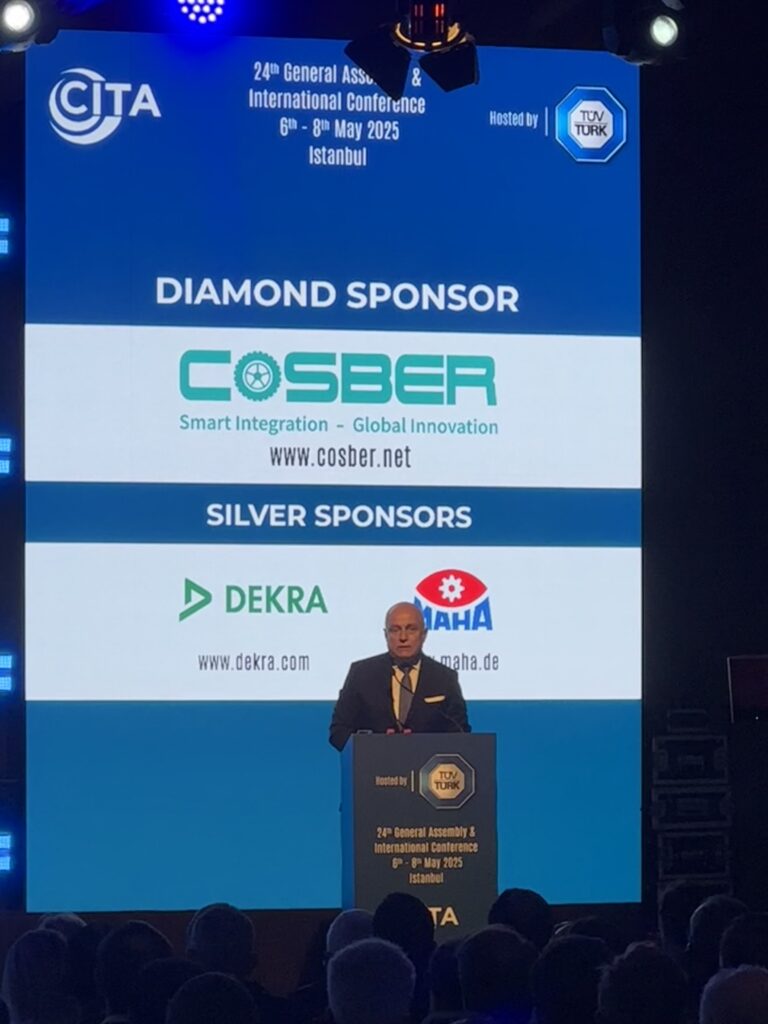
From May 6–8, 2025, Istanbul welcomed delegates from around the world for the CITA International Conference, hosted with exceptional professionalism and warmth by TÜV TÜRK. This year’s theme, “Forging Global Alliances for Safer Roads and a Greener Future,” framed three days of insightful dialogue, global cooperation, and technical exchange at a pivotal time for the roadworthiness and vehicle compliance community.

The event commenced with the 24th CITA General Assembly, held on May 6, where CITA President Gerhard Müller opened the proceedings by warmly welcoming CITA members and global delegates.

He highlighted the critical need for continued action toward road safety and vehicle environmental compliance, especially as the world approaches the mid-term mark of the Global Plan for the Decade of Action for Road Safety 2021–2030. In his words, “We must continue to emphasize the role of vehicle compliance to make our roads safer and cleaner”.

A focused article on the Assembly will follow.

The opening of the international conference on May 7 featured a high-level Plenary Session 1 with welcoming addresses by:

  • Gerhard Müller, CITA President
  • Kemal Ören, CEO of TÜV TÜRK
  • Patrick Fruth, CEO of TÜV SÜD Division Mobility
  • Murat Baştor, General Manager, Turkish Ministry of Transport and Infrastructure​

Their collective messages emphasized international collaboration, regulatory consistency, and the role of innovation in transforming mobility for safety and sustainability.

President Müller extended heartfelt thanks to the host TÜV TÜRK, particularly COO Koray Özcan, whose contributions were instrumental. Gratitude was also extended to the sponsors: Diamond sponsor COSBER, Silver sponsors MAHA and DEKRA, and event supporters VTEQ and Midtronics.

Following the opening plenary, Plenary Sessions 2 and 3 explored the Turkish PTI success story and featured impactful keynote speeches.

Experts such as Peter Szatmari (EU Commission DG MOVE), Richard Damm (KBA), Walter Nissler (BMK), and Spiros Voyadzis (PFD) discussed the evolving legislative landscape, technology’s role in inspections, and international cooperation on used vehicles​.

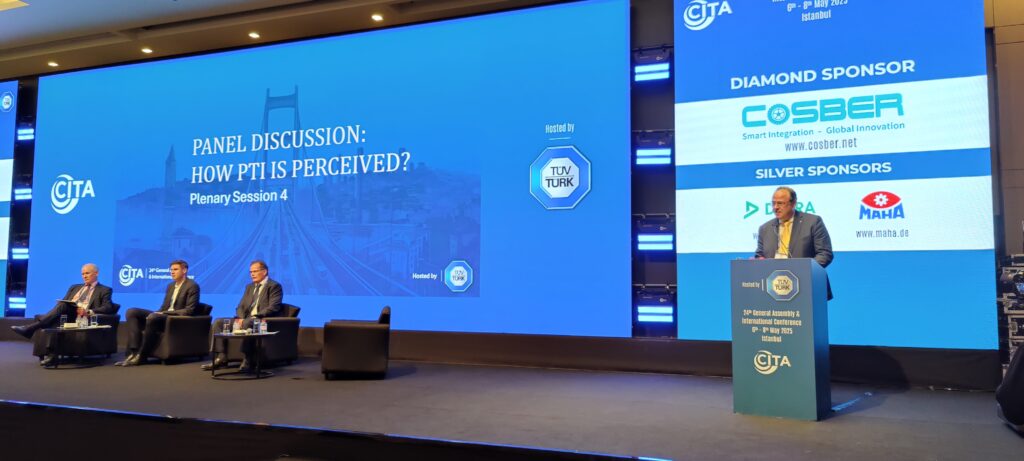
Plenary Session 4, held on the afternoon of May 7, focused on the theme "How PTI is Perceived?" and was structured as a dynamic panel discussion. The session, framed by Eduard Fernández - CITA Executive Director, saw Mervyn Edwards (TRL) presenting the relationship between vehicle defects identified in periodic inspections and those found in collision analyses. Session's panelists included Guillermo Magaz (AECA-ITV), Richard Goebelt (TÜV-Verband), and Mervyn Edwards (TRL), who provided a range of perspectives on public perception, data reliability, and regulatory approaches.

Throughout the conference, attendees also engaged in focused split sessions on:

  • Vehicle compliance in low- and middle-income countries (LMIC) - Leaded by: Ferose Oaten, AVTS
  • New technologies and data management - Leaded by: Fred Blüthner, FSD
  • Environmental protection - Leaded by: Thomas Ost, DEKRA
  • Inspection procedures and methods - Leaded by: Olivier Pletinckx, CITA
  • Electric powertrains - Leaded by: Víctor Salvachúa, APPLUS ITEUVE
  • Decarbonization - Leaded by: Eduard Fernández, CITA
  • Vehicle approval - Leaded by: Alejandro Checa, CITA

These sessions facilitated cross-border learning and highlighted CITA’s vital role as a global platform for advancing vehicle inspection standards.

On the final day, Plenary Session 5 brought the conference to a close with a summary of the key outcomes from all technical split sessions. This comprehensive wrap-up, followed by closing remarks from President Gerhard Müller, who praised the collaborative spirit and reaffirmed CITA’s commitment to independent, fair, and modern vehicle inspections.

He noted, “We are not only a fraction of the solution, but more than that, we are a precondition” for safer roads and cleaner air​.

He once again extended sincere appreciation to TÜV TÜRK, the event sponsors, the speakers, and the CITA office team, recognizing their indispensable role in the success of the event.

As CITA continues to expand its impact, the 2025 Conference in Istanbul stood as a powerful reminder of the importance of international cooperation, innovation, and commitment in creating safer and more sustainable transport systems worldwide.

We thank all who joined us in Istanbul and look forward to our continued work together.


Training Courses Highlight the Future of EVs in Africa


The United Nations Economic Commission for Africa (UNECA) and the Global Energy Interconnection Development and Cooperation Organization (GEIDCO) organized a comprehensive series of training courses aimed at fostering the development of electric vehicle (EV) technology and maintenance skills across Africa. This initiative is part of a broader effort to promote sustainable development, industrial growth, and environmental protection on the continent.

The training courses, spanning from June 4th to June 14th, covered a wide range of topics essential for the advancement of EV technology and energy storage systems (EST) in Africa. These sessions were designed to equip African governments, private sector companies, and young entrepreneurs with the knowledge and skills needed to participate effectively in the global EV and EST value chain.

Among the key events was the training session held on June 13th, which featured the contributions from CITA: Entitled "Electric Vehicle Maintenance", the session was conducted by the presentations from Mr. Víctor Salvachúa and Mr. Eduard Fernández, drawing significant attention from various stakeholders involved in the EV industry.

Mr. Salvachúa, leader of the CITA Task Force on Electric Vehicles and head of CITA's Topic Area A, delivered a technical presentation that delved into the realities and challenges of managing electric vehicles from a practical, real-world perspective. His insights were crucial in highlighting the operational hurdles and maintenance issues faced by EVs, providing participants with a thorough understanding of the technical aspects that must be addressed to ensure the efficient functioning and longevity of these vehicles.

Complementing the technical insights, Mr. Fernández, the Executive Director of CITA, offered an institutional presentation. He emphasized the role of CITA in advancing global standards and best practices in vehicle inspection and maintenance, thereby supporting the region's transition towards cleaner and more efficient transportation solutions.

Enhancing Mongolia’s Traffic Safety: A Strategic Initiative


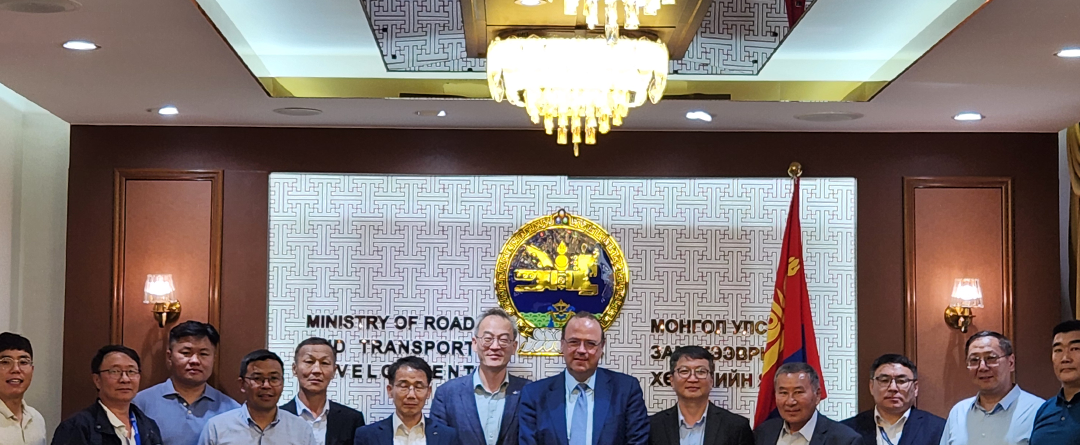
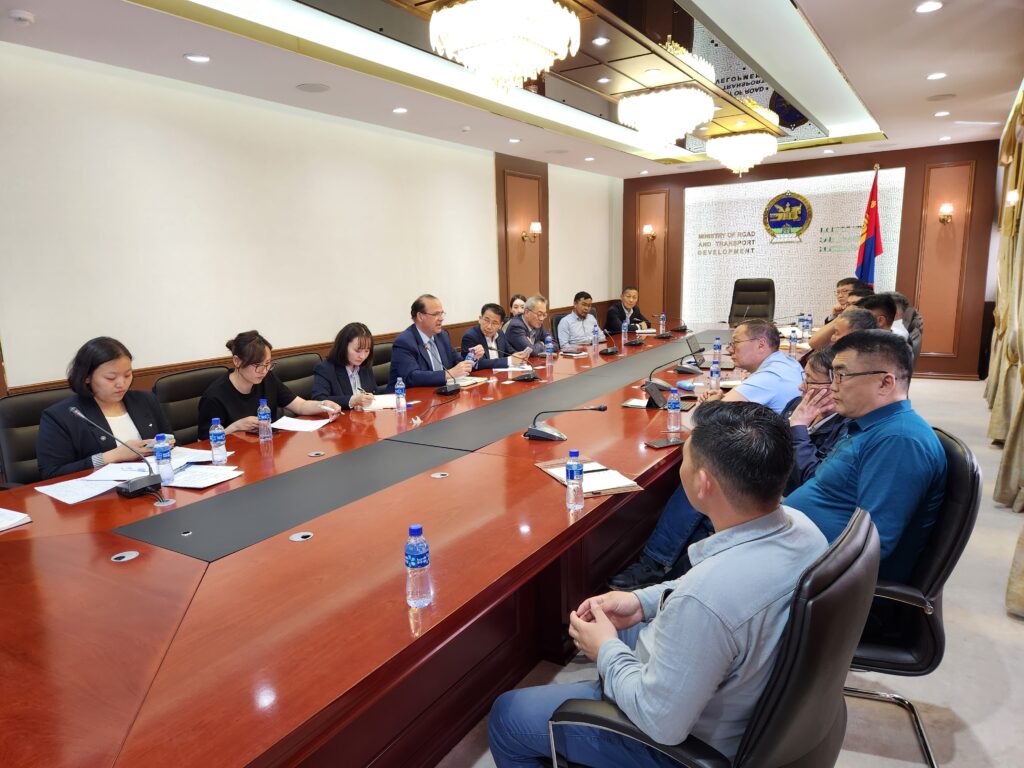
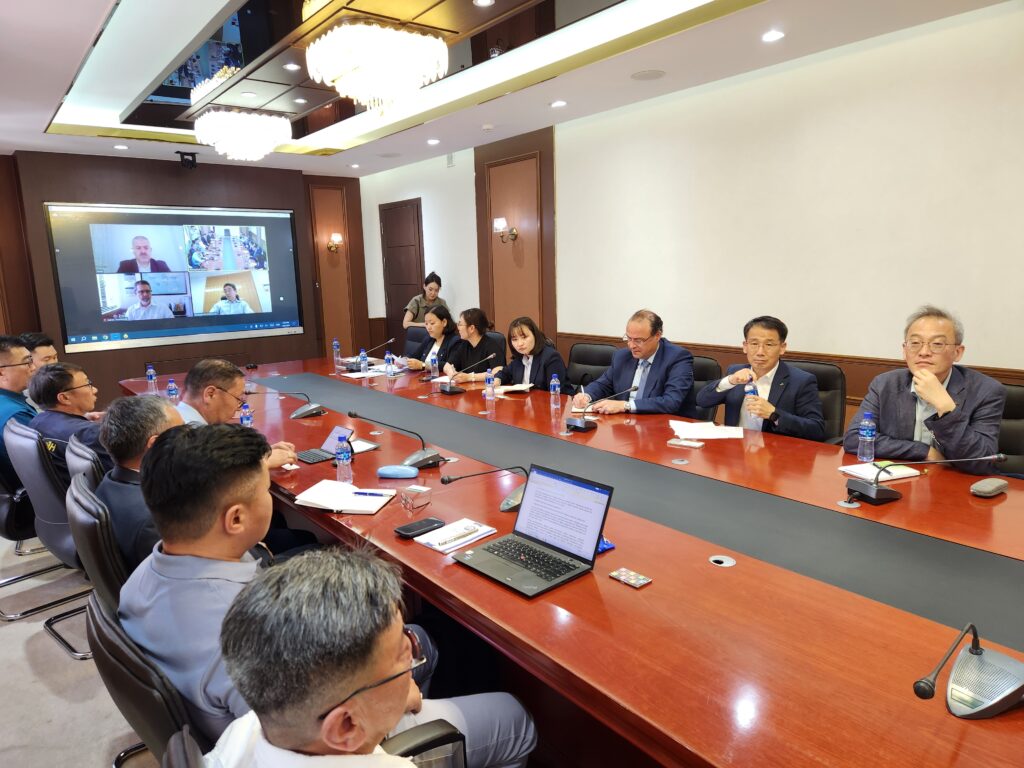
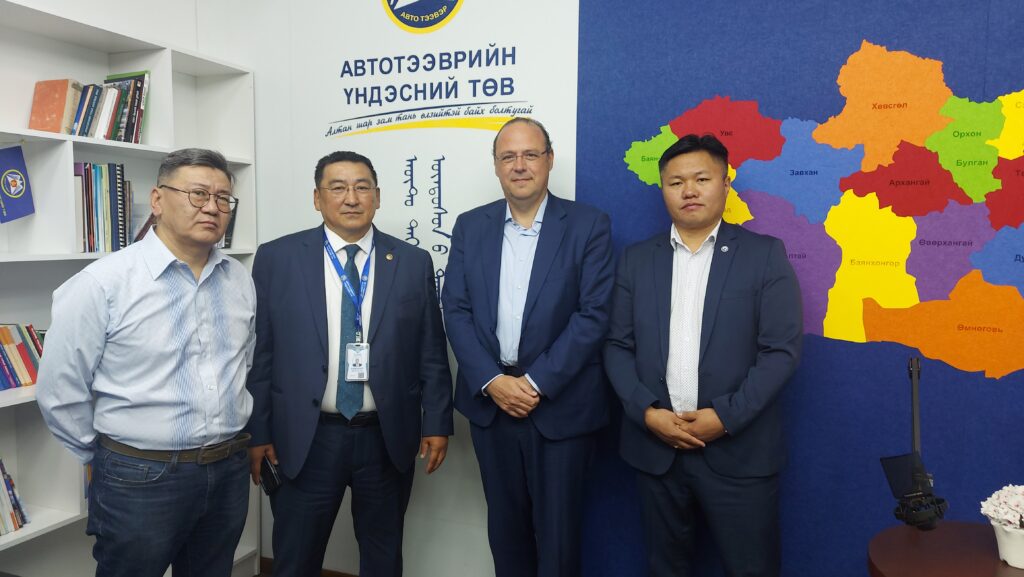
In early June, Ulaanbaatar, the capital city of Mongolia, hosted a significant seminar organized by the Korea Transportation Safety Authority (KoTSA). The seminar focused on the theme of "The Role of Inspection for the Safety of Vehicles in Developing Countries and Measures to Improve the Import and Export Environment." This event was part of the broader Mongolia Transport Safety Improvement Project, a key initiative aimed at enhancing road safety and environmental health in Mongolia.

The seminar gathered several notable figures in the transportation safety sector:

  • Mrs. Munkhnasan, Director of the Mongolian Road Transport Development Department, along with her team.
  • Mr. Eduard Fernandez, Executive Director of CITA.
  • Mr. Kaneyoshi Ikeda, President and Managing Director of JEVIC.
  • Mr. Visar Cekici, Head of Vehicle Registration of the Albanian General Directorate of Road Transport Services.

The seminar aimed to highlight the importance and necessity of vehicle inspections, emphasizing their role in improving road safety and air quality. Through its project in Mongolia, KoTSA sought to secure the government's implementation capability for enhancing the import and export environment, and to discuss potential cooperation with neighboring countries.

Eduard Fernández's participation was particularly significant, given CITA's extensive experience and knowledge from previous projects in Africa. His visit underscored the importance of discussing more cases and current activities in WP.29, aiming to attract the Mongolian government's interest and contribute to the project's success.

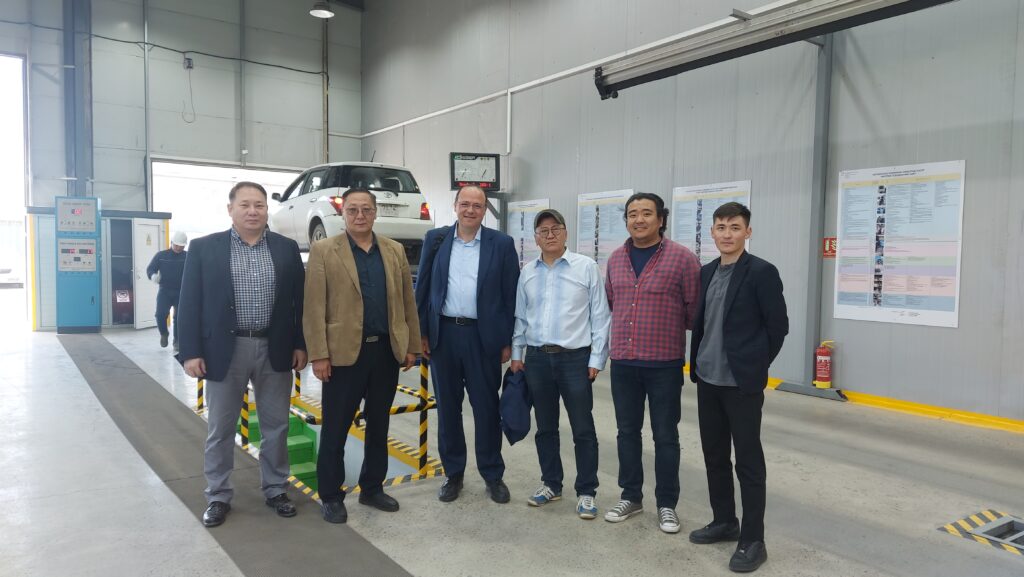
During his stay, Mr. Fernandez also met with members of the National Road Transport Center and visited several PTI centers, providing valuable insights into the ongoing efforts and future plans.


About the Project
The Mongolia Transport Safety Improvement Project, launched in August 2023, is an ambitious initiative aimed at enhancing vehicle inspection facilities and capacity building within Mongolia. The project is a collaborative effort involving several key partners:

  • Ordering Agency: Korean International Cooperation Agency (KoICA)
  • Mongolian Partners: Ministry of Road and Transport Development (MRTD) and Mongolia Road Transport Center (NRTC)
  • Project Partners: Korean Transportation Safety Authorities (KoTSA), the Korea Transport Institute (KOTI), and the Korean Road Traffic Authority (KOROAD

The primary goals of the project are to enhance traffic safety and improve air quality in Ulaanbaatar. By strengthening vehicle inspection capacity and modernizing inspection facilities, the project aims to significantly reduce traffic accidents. Additionally, the project includes national policy consulting on vehicle emission gases to address air pollution in the capital city.

Looking forward, the project plans to continue its policy consulting and modernization efforts, ensuring the establishment of a comprehensive vehicle inspection management system. Ongoing capacity building through continuous training programs remains a cornerstone of this initiative.


Seminar on Mandatory PTI by ANASEVI


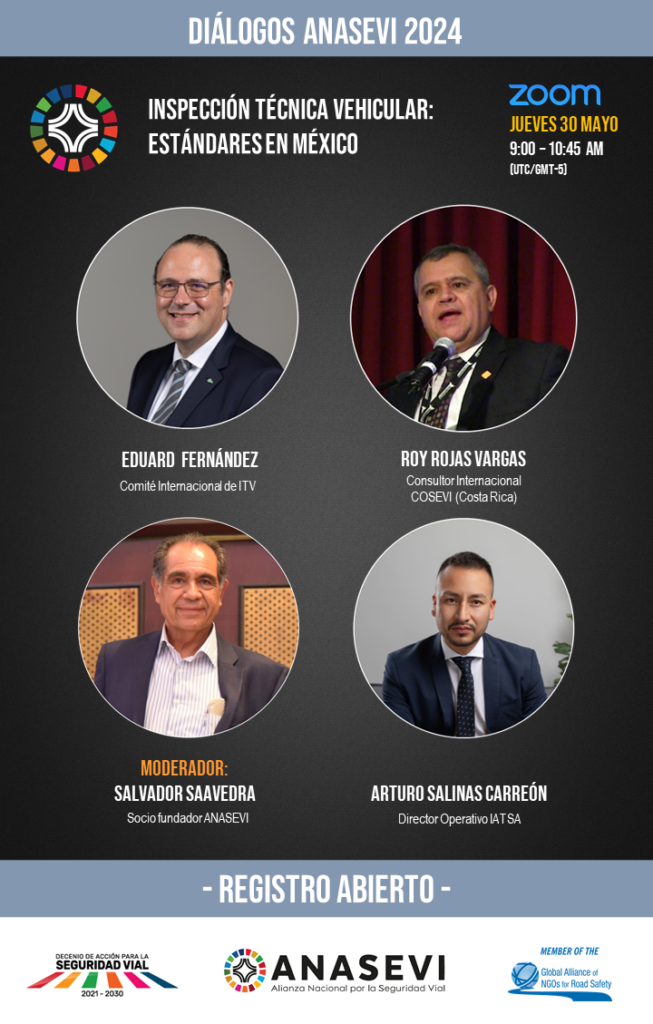
The National Alliance for Road Safety in Mexico (ANASEVI) organized the third session of its "ANASEVI Dialogues 2024" seminar series, focusing on the implementation of mandatory PTI. This webinar took place on May 30 and served as a crucial platform to discuss road safety, accident prevention, and the environmental impact of vehicles in Mexico.

Entitled "Inspección Técnica Vehicular. Estándares en México," the seminar aimed to address the challenges and benefits of implementing mandatory PTI in Mexico. The primary objective was to improve road safety, prevent traffic accidents caused by mechanical failures, promote a culture of vehicle maintenance, and reduce the environmental impact of vehicles. Participants discussed key aspects such as necessary equipment, professional training, inspection protocols, and mechanisms to ensure the quality and transparency of inspections.

The event featured prominent experts in the field. Roy Rojas Vargas, an international consultant from COSEVI (Costa Rica), spoke on "PTI Experiences in LATAM: Proposals for Implementation in Mexico."

Mr. Eduard Fernández, CITA Executive Director, delivered a presentation on "PTI Experiences: Recommendations for Implementation in Mexico." His presentation provided valuable input from worldwide experiences, highlighting best practices and successful strategies from various countries. As the Executive Director of CITA, he shared comprehensive insights based on global experiences with PTI.

Luis Arturo Salinas Carreón, Operational Director of IATSA, discussed the "Challenges of Implementing PTI from the Service Provider's Perspective." The session was moderated by Salvador Saavedra, founding partner of ANASEVI and President of the Automotive Industry Committee at CANACINTRA (Mexico).

The "ANASEVI Dialogues 2024" series offered a unique opportunity for stakeholders interested in sustainable mobility and road safety to engage and contribute to creating a safer and more sustainable environment on Mexican roads.


Mobility in Slovakia Conference


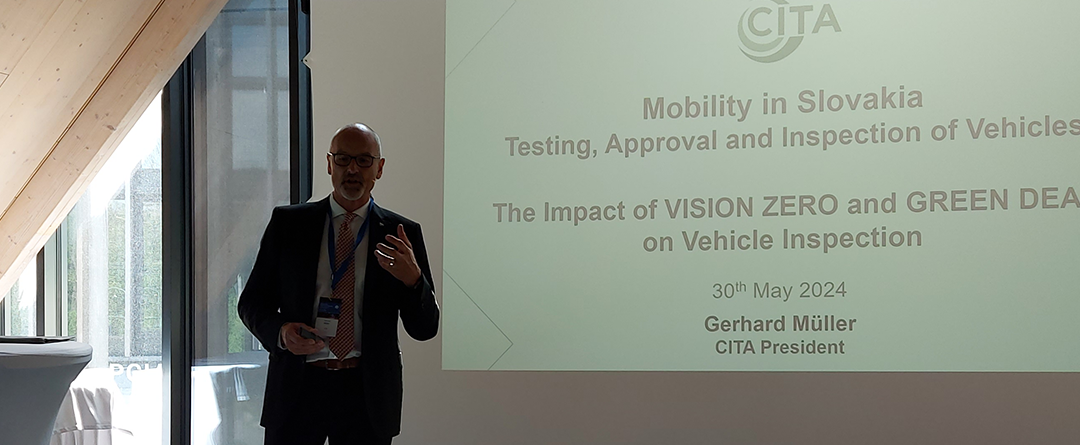
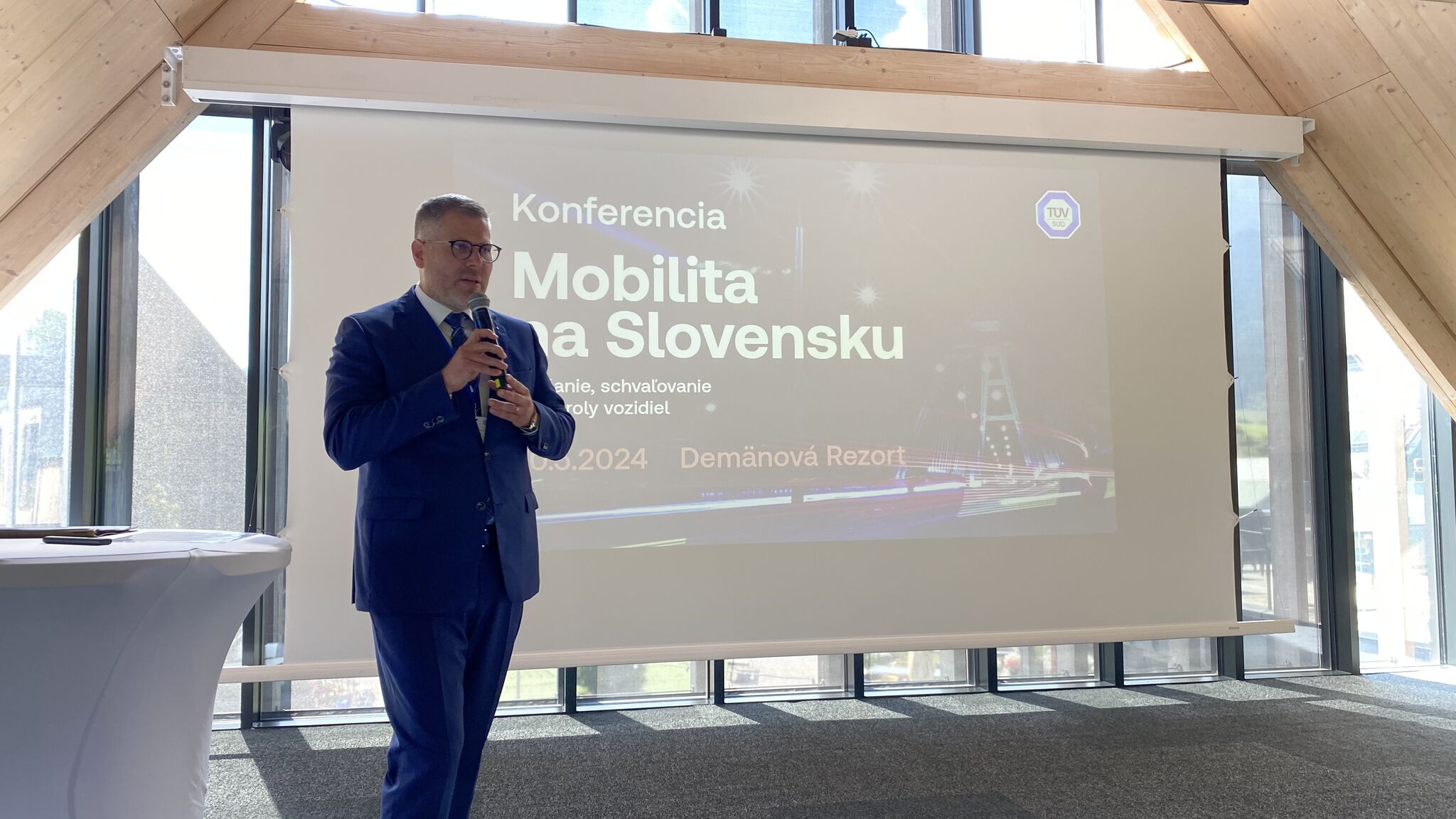
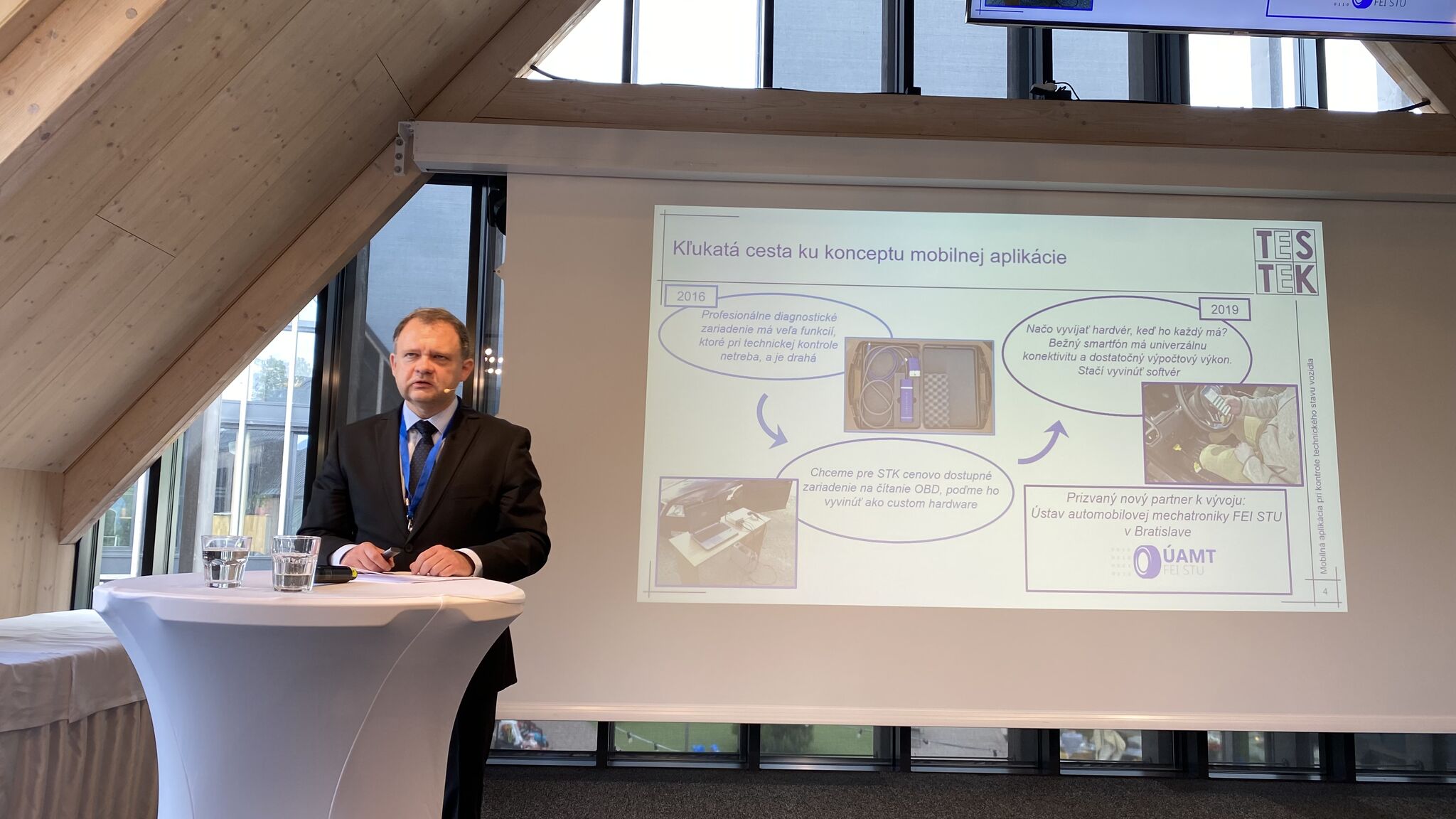
On May 30, 2024, the "Mobility in Slovakia" conference brought together key stakeholders in the field of vehicle testing, approval, and inspection. This significant event, organized by TÜV SÜD in collaboration with the Ministry of Transport of the Slovak Republic, featured active participation from CITA, as well as representatives from Homola, TESTEK, S-EKA, and IRIS-IDENT.

The conference aimed to address the challenges and advancements in vehicle inspection and approval processes, attracting the attention of professionals and organizations deeply involved in this critical field.

CITA President Mr. Gerhard Müller delivered a compelling keynote, emphasizing the importance of vehicle inspection in achieving the ambitious goals of Vision Zero and the European Green Deal. Mr. Müller highlighted how these EU strategies will influence future trends in the automotive industry, stressing that rigorous vehicle inspections are essential to ensuring safety and environmental sustainability.

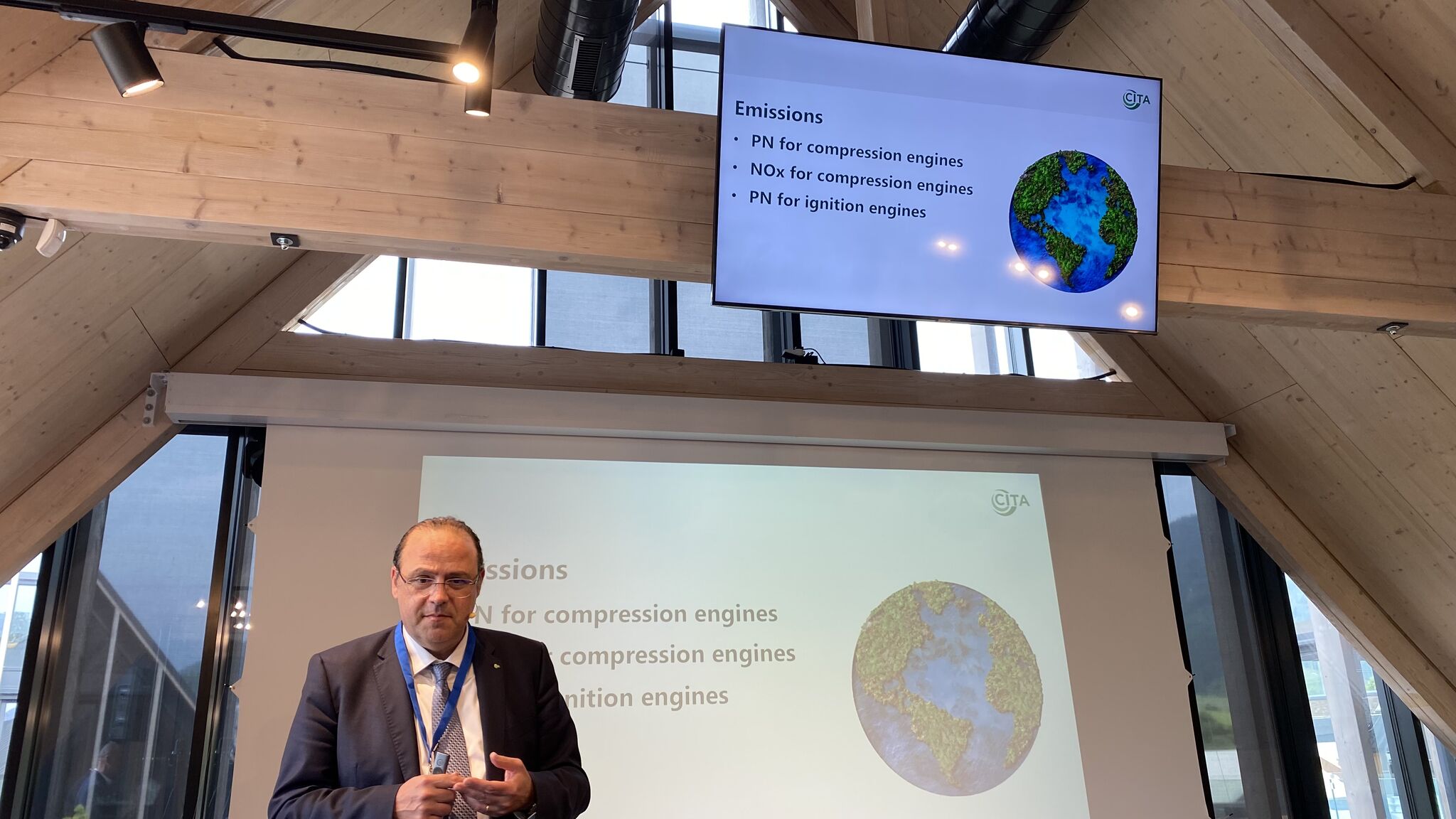
CITA's active participation extended beyond the keynote, with a detailed presentation by Mr. Eduard Fernández - CITA Executive Director, who discussed the evolving landscape of vehicle inspections and the regulatory changes on the horizon.

The conference agenda included a series of insightful lectures covering a wide range of pertinent topics. Experts discussed cybersecurity in the automotive sector, a critical area as vehicles become increasingly connected and digitalized. The upcoming changes to the Directive on technical inspection of vehicles and the EURO 7 emission standard were also thoroughly examined, providing attendees with valuable insights into future regulatory requirements.

The "Mobility in Slovakia" conference underscored the critical role of PTI in achieving safer roads and a cleaner environment. As the automotive industry continues to evolve, such events are essential for fostering collaboration and innovation to meet the challenges of the future.