Lastest News

CITA TA Meetings in Oslo hosted by NPRA


CITA held its Topic Area B and C hybrid meetings on 8 and 9 October 2025 in Oslo, Norway, kindly hosted by the Norwegian Public Roads Administration (NPRA) at their headquarters. The meetings brought together CITA members to exchange key developments related to vehicle compliance, roadworthiness, and external legislative affairs.

Topic Area B โ€“ Optimizing Current Vehicle Compliance / 8 October 2025 โ€“ 14:00 CEST

The TA B session focused on practical approaches to optimizing current vehicle compliance, with presentations and discussions covering a wide range of technical inspection issues:

  • NPRA provided an in-depth presentation on the results of their testing of electric vehicles in Norway, followed by an interactive discussion on challenges and best practices.
  • Representatives from Sweden shared their experience with PTI of motorcycles, highlighting lessons learned and operational insights.
  • CITA members participating at the UNECE working group presented updates beyond the 1997 Vienna Agreement, including the data required to inspect Electronic Control Safety Systems (ECSS).
  • Innovative methods for automated evaluation of brake tests within centralized PTI information systems were also showcased.
  • The meeting concluded with updates from several CITA Task Forces โ€” including Roadworthiness Package, Brakes, and Lighting Devices & Reflectors โ€” followed by a discussion on next steps.

Technical Visit / 9 October 2025 โ€“ 10:00 CEST | On the morning of the second day, participants took part in a live technical visit, during which NPRA carried out a real PTI inspection on an hybrid vehicle. This hands-on demonstration offered participants a concrete insight into Norwegian testing procedures, equipment, and inspection workflows for EVs, sparking valuable exchanges on practical implementation across different national contexts.

Topic Area C โ€“ External Affairs / 9 October 2025 โ€“ 14:00 CEST | The TA C session was dedicated to legislative and external developments relevant to the CITA community:

  • After a welcome by NPRA, the discussion focused on the EU Roadworthiness Package revision, with keynote contributions from ETSC, and Michael Wenzel (DEKRA), Chair of the CITA Task Force on the Roadworthiness Package. Participants exchanged views on the European Commissionโ€™s proposal, identifying key points and next steps in the legislative process.
  • Further agenda items addressed CITAโ€™s legislative monitoring activities, the consequences of the EUโ€“US Joint Statement on trade in the automotive sector, and an update on CITAโ€™s position regarding access to vehicle data, presented by the CITA TF on Connected Vehicles.
  • The session concluded with a synthesis of take-aways and planned follow-up actions.

These hybrid meetings once again demonstrated the value of bringing together members from across regions to discuss technical inspection practices and policy frameworks, while reinforcing CITAโ€™s active role in both operational excellence and legislative dialogue.

CITA warmly thanks NPRA for their hospitality and all participants for their contributions to the fruitful discussions.


CITA Visit in Saudi Arabia


Last week, CITA Executive Director Eduard Fernรกndez visited Riyadh, Saudi Arabia, to meet with CITA members and key stakeholders in the region.

During his visit, Mr Fernรกndez held productive discussions with SASO, the competent authorities, and MASSAR, a CITA Golden Member and one of the major operators in the country.

The mission aimed to reinforce CITAโ€™s engagement in the Middle East, focusing on issues of local interest and exploring ways to further support the development of vehicle inspection systems in the region. This visit is part of CITAโ€™s broader strategy to strengthen regional collaboration and share best practices on vehicle safety, environmental protection, and compliance.

CITA extends its sincere thanks to MAHA for their valuable support in organizing the visit and facilitating meetings with local partners.


CITA TA Meetings hosted by VIAS in Brussels


On 30 September and 01 October 2025, CITA members gathered in Brussels for a new round of Topic Area (TA) meetings, generously hosted by VIAS Institute at its headquarters (Haachtsesteenweg โ€“ Chaussรฉe de Haecht 1405, 1130 Brussels). The programme included the meetings of TA A โ€“ R&D Vehicle Compliance, TA E โ€“ Quality, Training & Confidence, and TA D โ€“ Environmental Protection Systems, complemented by a technical visit to VIAS laboratories, a visit to a vehicle inspection centre, and a special invitation to DEKRAโ€™s centenary celebration.

Topic Area A โ€“ R&D Vehicle Compliance / The meetings opened on 30 September with TA A. After words of welcome, participants received updates from the Secretariat and from VIAS, followed by a presentation on noise measurement of electric vehicles. The session continued with reports from the Task Forces on ADAS, Electric Vehicles, and Type Approval, before moving into discussions on recent regulatory updates and the RWP process across the European institutions.

Topic Area E โ€“ Quality, Training & Confidence / That same afternoon, TA E convened. VIAS presented its training programmes for operators, followed by a presentation from ENAC on the main changes in the ISO 17020 FDIS and the expected next steps. Bilprovning contributed insights on the impact of the revised ISO 17020 in Sweden, with emphasis on quality, training, and independence. Members then reviewed ongoing work from the Task Force on Quality and exchanged perspectives on future priorities.

DEKRA 100-Year Anniversary Event / On the evening of 30 September, DEKRA warmly welcomed all CITA participants to a memorable 100-year anniversary celebration at Autoworld Brussels. This special event was an opportunity to recognise a century of contributions to vehicle safety and inspection, while offering members a convivial networking setting.

Technical Visit to VIAS and Inspection Centre / The programme continued on 01 October with a technical visit opened by Karin Genoe, CEO of VIAS. Participants had the opportunity to explore several of VIASโ€™ highly specialised laboratories:

  • Lab ALC: verification and homologation of alcohol testers and locks
  • Lab ATP: control of refrigerated trucks for the international carriage of perishable foodstuffs
  • Lab CAM: calibration and checking of speed enforcement devices (radars, red-light cameras, average speed cams)
  • Lab CAS: testing of protective helmets (motorbike, bicycle, child helmets EN1080, and speed pedelec helmets)
  • Lab CAV: verification of devices used in vehicle inspection centres in Belgium
  • Lab MEC: approval and calibration of tachograph and speed limitation device tools

The visit concluded with a guided tour of the inspection centre in Haaren, giving members an overview of daily inspection practices.

Topic Area D โ€“ Environmental Protection Systems / In the afternoon of 01 October, TA D held its session. Presentations included verification of emission tests in Belgium, PN measurement verifications, and an overview of emission tester calibration in Germany. DEKRA and TรœV Sรผd shared first results from a field study on OBD use for motorcycles and presented investigations into engine and SCR warm-up phases. The meeting closed with an update from the Task Force Emissions, highlighting ongoing work on emissions-related contents in the RWP.

VIAS Symposium โ€“ โ€œSafe Journeysโ€ / The programme concluded on 02 October with the VIAS symposium โ€œSafe Journeysโ€, where experts, policymakers, and stakeholders exchanged perspectives on mobility safety, inspection, and future challenges in road transport.

CITA warmly thanks VIAS for its excellent hospitality and organisation of these events. The meetings not only advanced the technical and regulatory discussions within the different Topic Areas but also offered members a unique opportunity to connect with VIASโ€™ laboratories and to celebrate DEKRAโ€™s centenary together.


7th International PTI Workshop 2025


On 17โ€“18 September 2025, Copenhagen hosted the 7th International PTI Workshop, jointly organized by the Danish Road Traffic Authority (Fรฆrdselsstyrelsen) and the Netherlands Vehicle Authority (RDW). The event began with a lively โ€œCome Togetherโ€ evening on 16 September, offering participants a chance to connect in an informal setting before two days of intensive discussions.

The workshop brought together regulators, technical experts, industry representatives, and inspection authorities from across Europe and beyond. The focus was on the future of PTI in light of fast-evolving technologies and new political priorities.

The agenda reflected the most pressing issues in the sector:

  • The forthcoming EU Roadworthiness Package and its legislative process.
  • Emissions testing, including NOx and PN measurement methods.
  • The roadworthiness of electric vehicles and enforcement challenges.
  • Access to vehicle data and the inspection of electronic safety systems.
  • Quality, supervision and the fight against fraud, with discussions on AI tools and automated evaluation.

CITA members played a central role throughout the programme:

  • Mr. Gerhard Mรผller, CITA President, delivered a keynote on โ€œNew technologies and the challenges for PTIโ€, underlining the crucial role of inspection in maintaining safety and trust in an era of automation and digitalization.
  • Mr. Pascal Buekenhoudt, CITA Vice-President Technical Affairs, chaired the workshops on emissions, leading discussions on NOx and PN testing.
  • Mr. Marian Rybiansky, members of the CITA Bureau Permanent, and Mr. Jaroslav Olexa, co leader of CITA Topic Area E, moderated and presented in the Quality and Supervision sessions, covering AI-driven supervision tools and automated brake test evaluation.
  • Ms. Lotte Dijkink, also member of the Bureau Permanent, contributed to the deep-dive session on the Roadworthiness Package.
  • Mr. Vรญctor Salvachรบa, leader of the CITA Electric Vehicles Task Force, chaired the EV workshops, addressing the enforcement of electric vehicle inspections.
  • Mr. Fred Blรผthner, leader of the CITA Vehicle Data and Connected Vehicles Task Force, participated in the workshop on data.

Their active involvement highlighted CITAโ€™s leadership in shaping the inspection communityโ€™s response to current and future challenges.

Participants rotated through four dedicated workshop streams: Emissions, Electric Vehicles, Quality & Supervision, and Data. These sessions encouraged in-depth discussion and knowledge-sharing across different areas of expertise. One of the highlights was a live demonstration of plume chasing, showcasing innovative techniques for monitoring vehicle emissions in real time.

The final sessions explored societal and strategic aspects of PTI reforms, including roadside inspection findings and lessons from PTI reforms for older vehicles. The workshop concluded with summaries from all moderators and closing remarks by representatives of Fรฆrdselsstyrelsen and RDW.


A new CITA Gold Member from Saudi Arabia


Massar United was established in 2023 as one of the first companies licensed by the Saudi Standards, Metrology, and Quality Organization (SASO) to provide Periodic Technical Inspection (PTI) services in the Kingdom of Saudi Arabia.

Their mission is to enhance road safety and support environmental sustainability by delivering reliable and transparent inspection services in alignment with Saudi Vision 2030.

THIS DOCUMENT provides an overview of their organization, including our current operations, future expansion plans, and strategic objectives. They remain committed to upholding the highest standards of quality and safety, and they look forward to the opportunity of engaging with CITA to support the advancement of vehicle inspection services internationally.


A new CITA Bureau Permanent Member


CITA is pleased to announce that Ms. Lotte Dijkink (RDW) has joined the Permanent Bureau of CITA as an observer. She will serve in this role until the next CITA General Assembly in 2026.

Ms. Lotte Dijkink replaces Mr. Geert Konings.

CITA warmly thanks Mr. Geert Konings, who is retiring, for his longstanding commitment and contributions. Over the years, Mr. Konings has dedicated significant time and energy to supporting the mission and work of CITA, and his efforts have been instrumental in advancing the associationโ€™s goals.

We wish him all the best for the future and express our sincere gratitude for his valuable service.

CITA concerns on USโ€“EU โ€œmutual recognitionโ€ of vehicle standards


On 21 August 2025, the European Union and the United States announced a Framework Agreement on Reciprocal, Fair and Balanced Trade. Among the many provisions in the agreement, one element stands out with direct implications for road safety and vehicle regulation: both parties โ€œintend to accept and provide mutual recognition to each otherโ€™s [automotive] standards.โ€

The European Transport Safety Council (ETSC) has raised strong concerns regarding this commitment. As ETSC Executive Director Antonio Avenoso stated, this decision is not a minor technicality but a political choice that risks putting trade convenience ahead of road safety. Europe has, over decades, built a reputation as a global leader in road safety regulation.

The General Safety Regulation (EU) 2019/2144 mandates the deployment of life-saving technologies such as:

  • Automated Emergency Braking (AEB)
  • Lane Keeping Assistance (LKA)
  • Pedestrian and cyclist protection requirements
  • Advanced Driver Distraction and Drowsiness Monitoring (DMS)

These measures are the result of years of evidence-based policymaking, and they underpin the EUโ€™s Vision Zero strategy of eliminating road fatalities and serious injuries.

By contrast, U.S. federal vehicle standards do not guarantee the same level of protection. Allowing American vehicles into the EU market through mutual recognition โ€“ rather than through proven type-approval compliance โ€“ opens the door to larger, heavier, and less safe vehicles entering Europe.

For the international vehicle inspection community, this raises immediate challenges. Periodic Technical Inspection (PTI) systems are designed around European type-approval requirements. Introducing vehicles built to fundamentally different standards risks creating regulatory blind spots in inspection procedures, undermining decades of progress in ensuring roadworthiness and environmental compliance across the European fleet.

CITA supports ETSCโ€™s warning that Europe must not undermine its safety framework in the pursuit of short-term trade advantages. Road safety standards are not bargaining chips โ€“ they are a public good that protect lives and reduce the economic and social burden of road crashes.

CITA President Gerhard Mรผller emphasized: โ€œThe blanket recognition of lower American vehicle safety standards would not only contradict all efforts to improve road safety in the European Union, but also lead to additional distortion of competition to the detriment of the European vehicle industry. Against the background of nearly stagnant numbers of traffic fatalities in Europe, I urge political leaders not to allow any compromises on the safety of American vehicles, but rather to make much greater efforts to achieve the goals of Vision Zero.โ€

Compromising on safety standards would not only weaken Europeโ€™s regulatory credibility but would also expose road users to preventable risks. CITA therefore joins ETSC in calling on policymakers to prioritize lives over trade convenience.


More info:

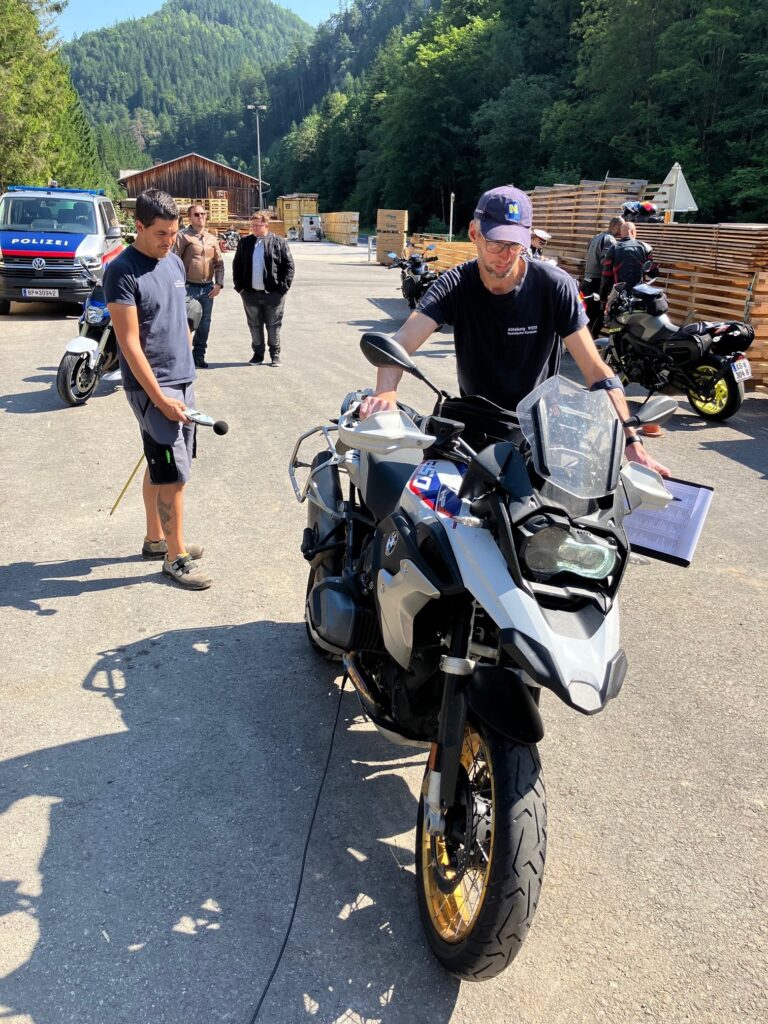
CITA President Visits Austria for RSI Insights


Last week, CITA President Gerhard Mรผller was invited by Mr. Georg Hรถnig, Head of the Department of Technical Vehicle Affairs at the State Government of Lower Austria, for a two-day technical visit focused on Roadside Inspections (RSI). Mr. Hรถnig, who oversees all vehicle inspections in the region, including RSI, organized a comprehensive program showcasing Austriaโ€™s inspection practices.

Day 1: Roadside Inspection Practices for Trucks and Special Vehicles / The first day began with a visit to a steady inspection site along the highway connecting the Czech Republic to Vienna. From a control room, trucks were automatically diverted using special traffic signals, then weighed and measured while driving at 25 km/h through a dedicated lane. Vehicles showing irregularitiesโ€”or those selected by the policeโ€”were directed to the inspection area for a full technical check. President Mรผller joined an RSI of a truck transporting hazardous goods, which fortunately revealed only minor defects.

The program continued at a mobile inspection site, where police targeted smaller trucks with trailers (N1 with O2). Suspicious vehicles detected from the highway were escorted to the site. Two significant cases were observed: a trailer with completely non-functioning brakes, and a vehicle combination overloaded by several hundred kilos.

Later, Mr. Mรผller visited the brand-new governmental inspection centre in Wolkersdorf (KFZ-Prรผfstelle Wolkersdorf), dedicated to special vehicle appraisals, such as modifications and technical changes.

Day 2: Motorcycle Roadside Inspections / The second day focused on motorcycle inspections. At a mobile site set up on a popular curvy road for motorcyclists, police conducted random stops. After checking documents, government technical experts carried out full inspections, including emissions and noise tests.

Roadside Inspection Organization in Austria / In Austria, RSI is a joint effort between the regional governments and the police. The police is responsible for identifying and stopping vehicles, conducting initial checks, and directing suspicious cases to inspection sites. Then, specially trained technical experts from the regional governments perform thorough inspections. Lower Austria operates steady inspection sites along highways, as well as mobile sites for trucks, passenger cars, and motorcycles.

Visit to ร–AMTC Driving Safety Center / In addition to the RSI program, CITA member ร–AMTC welcomed President Mรผller to its Driving Safety Center in Melk. The center provides a wide range of training courses for drivers, motorcyclists, and emergency services. As a passionate motorcyclist himself, President Mรผller even participated in a special motorcycle training session.


A new CITA member from Taiwan


Vehicle Safety Certification Center (VSCC), established in 2009, is a Non-Profit Organization and the only vehicle safety type approval institution authorized by Taiwanโ€™s Ministry of Transportation and Communications (MOTC).

To enhance vehicle safety management, VSCC provides comprehensive services including vehicle and component safety type approval, vehicle safety test, accreditation of technical services, examination of in-use vehicle alteration, alcohol interlock device certification, taximeters functional check / diversified taxi APP fare check, vehicle safety investigation and recall supervision, management of the Taiwan New Car Assessment Program (TNCAP), promotion of vehicle electrification and decarbonization, intelligent vehicle and V2X product certification management.


Please visit their website

CITA White Paper on Brakes Inspection


CITA is pleased to announce the publication of its new white paper titled "How to Inspect Brakes of Road Vehicles", a comprehensive guide addressing the critical role of brake testing in vehicle safety and PTI.

This technical paper was developed by the CITA Task Force on Brakes, a multidisciplinary expert group composed of representatives from leading PTI organizations, equipment manufacturers, and testing bodies. Their objective was to assess current inspection methods and recommend a harmonized, effective, and future-proof approach for evaluating braking systems in road vehicles.

The CITA Task Force on Brakes:

  • Leader: Marian Rybiansky โ€“ TESTEK, a.s.
  • Christian Fahry โ€“ FSD Fahrzeugsystemdaten GmbH
  • Martin Kraus โ€“ DEKRA SE
  • Jordi Brunet โ€“ VTEQ - VEHICLE TESTING EQUIPMENT, S.L.
  • Peter Ondrejka โ€“ TESTEK, a.s.
  • Georges Petelet โ€“ CAPELEC
  • Christian Thalheimer โ€“ MAHA
  • Tomislav ล kreblin โ€“ CVH
  • Patrik Persson โ€“ APPLUS+
  • Benoรฎt Job โ€“ Muller Automotive sas

Why This Paper Matters
Braking systems are among the most safety-critical components in vehicles. However, inspection procedures across countries remain fragmented, and traditional testing methods often face practical and technical limitations. This white paper evaluates the full spectrum of testing methodologiesโ€”including dynamic road tests, static brake testers with loaded and unloaded vehicles, extrapolation techniques, and the increasingly relevant reference value method.

Key Takeaways
The reference value method, as defined in UNECE Regulation No. 13, ISO 21069, and ISO 21995, offers the most reliable and efficient approach to brake performance testing in PTI environments. Unlike conventional methods, it allows for axle-by-axle verification of braking forces, is adaptable to both pneumatic and hydraulic systems, and does not require the vehicle to be fully loaded. To make this method widely applicable, the paper emphasizes the need for vehicle-type-specific reference data, accessible via the vehicleโ€™s diagnostic interface, and supported by EU legislation.

This white paper provides valuable recommendations to ensure that brake testing remains robust, consistent, and adaptable to the evolution of vehicle technologiesโ€”especially with the growing presence of electric braking systems and connected vehicle diagnostics.