
CITA Contributes to Global Dialogue at the 88th ITC Session
From 17 to 20 February 2026, the international inland transport community gathered at the Palais des Nations in Geneva for the 88th Annual Session of the UNECE Inland Transport Committee (ITC). Held primarily in Room XI and the Assembly Hall, the session took place at a pivotal moment for both the United Nations system and the global transport sector.
Under the high-level theme “Driving Innovation for the Future of Inland Transport”, the session addressed the profound transformation reshaping mobility — from automation and artificial intelligence to digitalization and data-driven governance. The High-Level Policy Segment on 18 February provided an opportunity to reflect on the evolving role of the ITC within the UN80 initiative and to examine how innovation can be responsibly embedded into coherent, science-based and interoperable regulatory frameworks

CITA was represented by its Executive Director, Mr. Eduard Fernández, and its President, Mr. Gerhard Müller, reaffirming the organization’s strong commitment to global cooperation in transport safety, compliance and sustainability.
The highlight of the week was the High-Level Policy Segment on 18 February, which brought together Ministers, senior government officials, heads of international organizations and industry leaders. Mr. Gerhard Müller was invited to deliver a high-level intervention during Ministerial Panel I: Innovation and Automation in Inland Transport, alongside key international transport leaders.
In his address to the plenary, Mr. Müller underlined the unique role of the ITC as the only global forum dedicated to inland transport in all its dimensions. He emphasised that:
- The ITC has historically driven harmonisation, facilitation of transport, environmental protection and road safety.
- WP.29 remains a global public good, providing transparent and science-based regulatory frameworks.
- Technological evolution — including automated driving, AI and software-defined vehicles — must be matched by equally robust systems of oversight and compliance.
- He stressed that innovation without transparency, accountability and harmonisation risks undermining public trust. Safety and environmental protection, he reaffirmed, must remain non-negotiable pillars of mobility policy.
CITA’s message was clear: technological evolution must become a societal evolution, delivering safer roads, cleaner mobility and responsible innovation.


Later that day, during the VIP Lunch, Mr. Müller delivered a second intervention, focusing on the human dimension of innovation. While acknowledging the extraordinary pace of automation, AI, connectivity and electrification, he reminded participants that mobility is fundamentally a human endeavor. He highlighted four essential principles of a human-centered mobility system:
- Protecting people by ensuring safety remains paramount.
Empowering people through accessible and inclusive mobility. - Respecting people via transparency in data and technological governance.
- Benefiting people through cleaner and more sustainable transport.
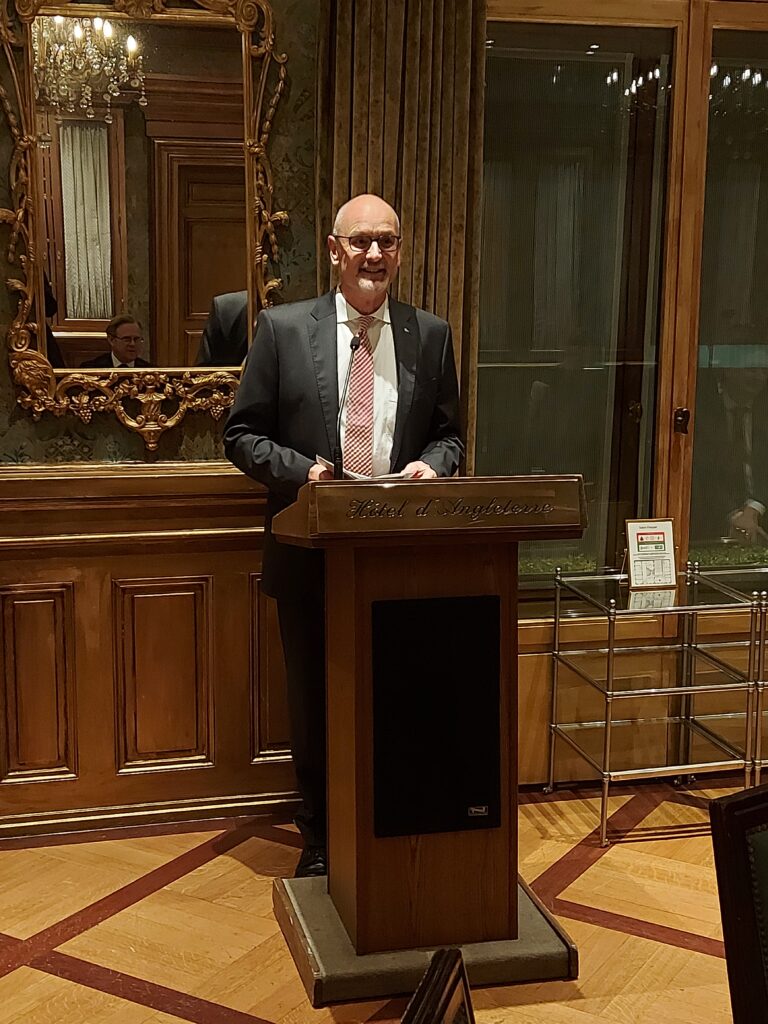
He emphasized that public trust is the cornerstone of successful innovation and that CITA’s work in vehicle compliance and roadworthiness continues to evolve alongside emerging technologies, including software-defined vehicles and automated driving systems.
In the evening, during the Ministerial Dinner, Mr. Müller delivered his third speech of the day. Reflecting on the day’s discussions, he praised the spirit of cooperation and cross-border collaboration demonstrated throughout the session. He noted that innovation and automation demand coordination, foresight and trust — and that the ITC provides the indispensable global forum for achieving this. Concluding with sincere appreciation to UNECE, he expressed confidence that international cooperation will continue to guide inland transport safely through its ongoing transformation.
The broader weekly programme included restricted and regular ITC sessions, multistakeholder workshops on the UN Decade of Sustainable Transport, and ministerial-level engagements.
CITA’s active participation reinforced its central role in ensuring that innovation in vehicle technology is matched by innovation in regulation, compliance and oversight. As vehicles become increasingly complex, software-driven and automated, the need for transparent, harmonized and science-based regulatory frameworks becomes even more critical.
CITA stands ready to continue supporting UNECE, ITC and WP.29 in safeguarding safety, environmental protection and public trust.
