
Bruxelles

New UN Framework for Safer & Cleaner Used Vehicles Adopted


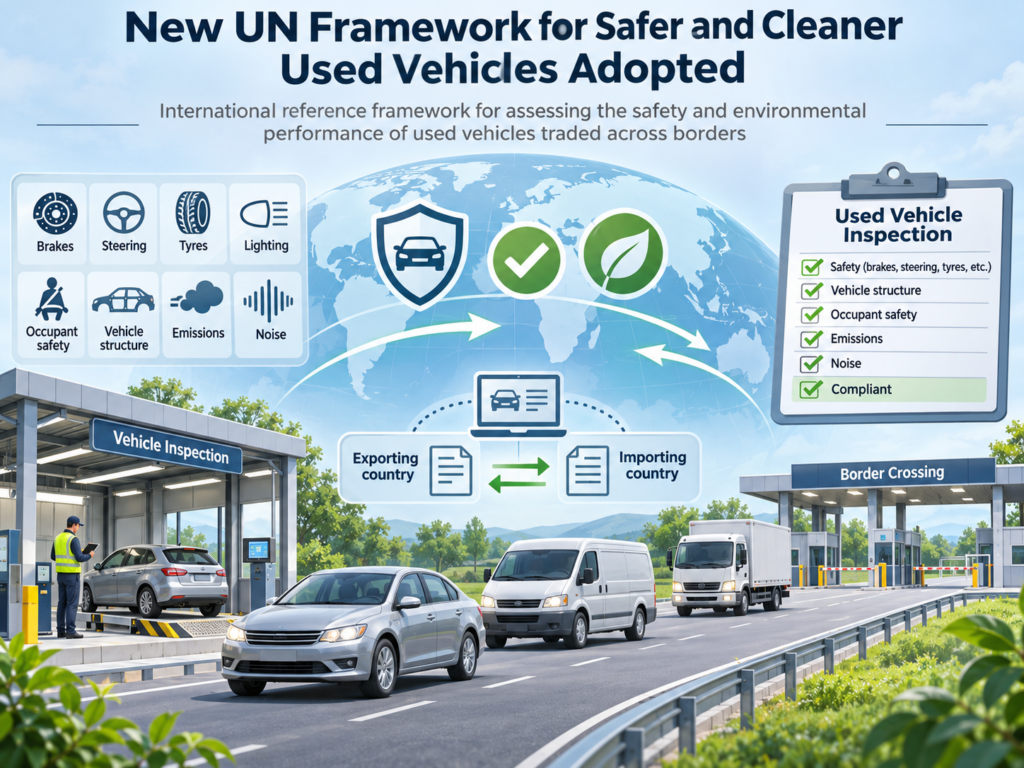
The Resolution establishes, for the first time, an internationally recognised reference framework for assessing the safety and environmental performance of used vehicles traded across borders. Its objective is clear: to help ensure that vehicles entering international markets meet minimum roadworthiness and environmental requirements, contributing to safer roads, cleaner transport and more sustainable mobility worldwide.

This achievement is particularly relevant for low- and middle-income countries, where imported used vehicles play an essential role in mobility and economic development but may also present significant safety and environmental challenges when their condition is not adequately verified.
The adoption marks a major milestone for the Informal Working Group on Safer and Cleaner Used and New Vehicles (SCUNV), established under WP.29 in 2021 to address the challenges associated with the growing international trade in used vehicles. The Resolution is the result of several years of collaboration between governments, international organisations, technical experts and industry stakeholders.

Importantly, the Resolution does not impose import restrictions or determine which vehicles countries must accept. Instead, it provides governments with a practical, transparent and internationally recognised framework for evaluating vehicle condition and compliance. National authorities retain full responsibility for establishing their own import policies and acceptance criteria.

As the global association representing the vehicle inspection sector, CITA has played an active role in this initiative from its inception. Drawing on its technical expertise and extensive experience in periodic technical inspection (PTI) and vehicle roadworthiness assessment, CITA has contributed to the development of inspection principles and practical methodologies supporting the new framework.

For many years, CITA has advocated that vehicles should meet appropriate safety and environmental requirements throughout their operational lifetime, regardless of where they are manufactured, traded or used. The new Resolution represents an important recognition of this principle and reinforces the essential role of vehicle inspection in protecting road users and the environment.

The framework establishes minimum inspection criteria covering essential vehicle systems, including braking, steering, tyres, lighting, occupant protection equipment and vehicle structure, as well as environmental requirements relating to pollutant emissions, noise and other environmental impacts.

These criteria draw upon existing UN Regulations, UN Global Technical Regulations, UN Rules and equivalent national and regional standards. They promote consistent, performance-based and technology-neutral inspection methodologies that can be adapted to different regulatory environments.

Beyond technical inspection requirements, the Resolution also encourages greater transparency and cooperation in international vehicle trade through recommended roadworthiness certification and information-sharing procedures between exporting and importing parties. These provisions can help strengthen confidence in vehicle condition assessments and support more informed decisions by national authorities.

The document provides a valuable foundation for further international cooperation on vehicle roadworthiness, including the possibility of adapting inspection requirements to emerging technologies and the growing presence of electric and hybrid vehicles.

For CITA, this achievement also demonstrates the importance of connecting international vehicle regulatory frameworks with practical vehicle inspection activities. Ensuring that vehicles continue to meet appropriate safety and environmental standards throughout their lifetime is essential, particularly when they move between markets with different regulatory requirements.

CITA welcomes this important milestone and remains committed to supporting governments, inspection organisations and international stakeholders in the implementation and future development of the framework.

The adoption of this Resolution is more than a technical achievement. It represents a landmark step towards safer roads, cleaner vehicles and better protection for road users worldwide, reaffirming that roadworthiness and environmental performance should remain priorities throughout every vehicle's operational life.
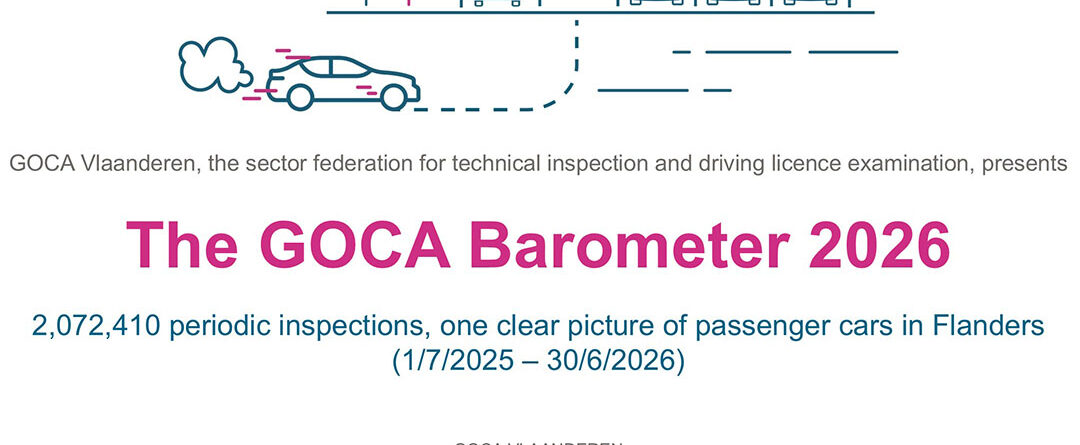


GOCA Vlaanderen Releases its First Barometer


Released on 6 November 2026, the GOCA Barometer 2026 analyses the inspection results of 2,072,410 passenger cars examined at 43 approved inspection centres in Flanders between 1 July 2025 and 30 June 2026.

Inspired by Germany's well-established TÜV Report, this initiative aims to improve transparency, strengthen consumer awareness and provide reliable information on the technical condition of the vehicle fleet.

The Barometer reveals that 17.4% of inspected passenger cars (360,981 vehicles) presented defects resulting in a driving ban or a requirement for re-inspection within 15 days or three months. Of these, 1.4% (29,980 vehicles) received a driving ban.

The analysis also highlights several important findings:

  • Vehicle age matters: The proportion of vehicles with defects increases from 10.0% for cars aged 4–5 years to 23.0% for those aged 14–15 years. Among vehicles aged approximately 18 years or older, the figure reaches 33.7%.
  • Mileage is another important indicator: The defect rate ranges from 7.6% for vehicles with 25,000–50,000 km to 42.2% for those exceeding 300,000 km.
  • Lighting remains a major concern: Headlight defects are the most frequently recorded category, affecting 5.3% of inspections, followed by exhaust emissions, wheels and tyres, and suspension.
  • Powertrain differences are visible: Petrol hybrids show the lowest defect rates across the analysed age groups. Diesel vehicles generally have higher defect rates than petrol vehicles of the same age, although differences in mileage must also be considered.
  • Electric vehicles require further monitoring: The current electric vehicle sample is predominantly composed of younger vehicles, limiting reliable conclusions about their long-term technical condition.

Importantly, GOCA Vlaanderen emphasizes that these findings demonstrate statistical associations rather than causal relationships. Vehicle age, mileage and powertrain type are interconnected, and the results should not be interpreted as rankings of individual manufacturers or models.

The GOCA Barometer illustrates how PTI data can contribute to a better understanding of vehicle condition and support informed decisions by motorists, policymakers and the automotive sector. By consolidating inspection results using a transparent methodology, GOCA Vlaanderen provides an evidence-based picture of recurring technical defects and how their occurrence varies across different vehicle groups.

For CITA and its international membership, this initiative represents a valuable example of how information generated through PTI can extend beyond individual inspection results, contributing to broader discussions on road safety, vehicle maintenance and the evolution of vehicle technologies.

GOCA Vlaanderen intends to develop the Barometer into a recurring publication, with the next edition covering inspections conducted between July 2026 and June 2027. Successive editions will make it possible to compare results over time and progressively identify developments in vehicle condition, including those associated with ageing fleets and the increasing presence of electrified vehicles.

CITA welcomes this initiative from its Gold Member GOCA Vlaanderen, highlighting the value of independent inspection data in strengthening knowledge, transparency and road safety.


CITA NewsRelease – October 2026 now available!


CITA is pleased to announce the publication of its October 2026 NewsRelease, featuring the latest developments, activities and achievements from across the global vehicle inspection community.

This edition highlights key moments from the CITA RAG Europe Conference in Vilnius and the RAG Asia-Australasia Conference in Daejeon, alongside recent international cooperation initiatives, including the signing of a Manifest of Understanding with the African Association of Road Safety Leading Agencies (AARSLA).

Readers will also find updates on CITA's technical and regulatory activities, covering the revision of the EU Roadworthiness Package, advances in ADAS inspection methodologies, headlamp aiming challenges addressed at UNECE GRE, and new research demonstrating the road safety benefits of PTI.

The NewsRelease also features CITA Task Force activities, webinars, contributions from members worldwide, and a warm welcome to the association's newest members.

We invite all members, partners and stakeholders to explore the latest edition and stay connected with CITA's ongoing work towards safer and cleaner roads worldwide.


CITA NewsRelease – May 2026 is now available!


Brussels, 3 June 2026. CITA is pleased to announce the publication of the May 2026 edition of the CITA NewsRelease, highlighting the organisation’s activities, achievements, and international engagement during the first months of the year.

This edition reflects CITA’s continued commitment to promoting safer, cleaner, and more sustainable mobility worldwide through technical expertise, regulatory cooperation, and stakeholder dialogue.

Among the highlights featured in this issue:
• A recap of the 25th CITA General Assembly, including key decisions, elections, and strategic priorities.
• Coverage of the CITA RAG Europe Conference 2026 and the presentation of the CITA Annual Report 2025.
• Insights from CITA’s high-level discussions on the revision of the European Roadworthiness Package, including events held at the European Parliament and under the Cyprus Presidency of the Council of the European Union.
• Updates on CITA’s participation in international forums such as the UNECE Inland Transport Committee, the VERT Forum, the ANSV International Vehicle Safety Congress, and DUSRA 2026.
• Highlights from recent webinars addressing Artificial Intelligence in vehicle regulation and Ukraine’s roadworthiness testing reform.
• Developments related to vehicle inspection systems in Peru, the revision of ISO 17020, and ongoing UNECE activities on vehicle retrofit systems.
• News from CITA members, including advances in remote sensing technologies and innovative inspection systems for ADAS-equipped vehicles.
• The introduction of several new organizations joining the CITA community.

The publication demonstrates the growing importance of vehicle inspection and compliance systems in supporting road safety, environmental protection, and public trust amid rapid technological transformation in the mobility sector.

We invite all members, partners, and stakeholders to read the full NewsRelease and stay informed about the latest developments shaping the future of vehicle inspection worldwide.


25th CITA General Assembly Recap


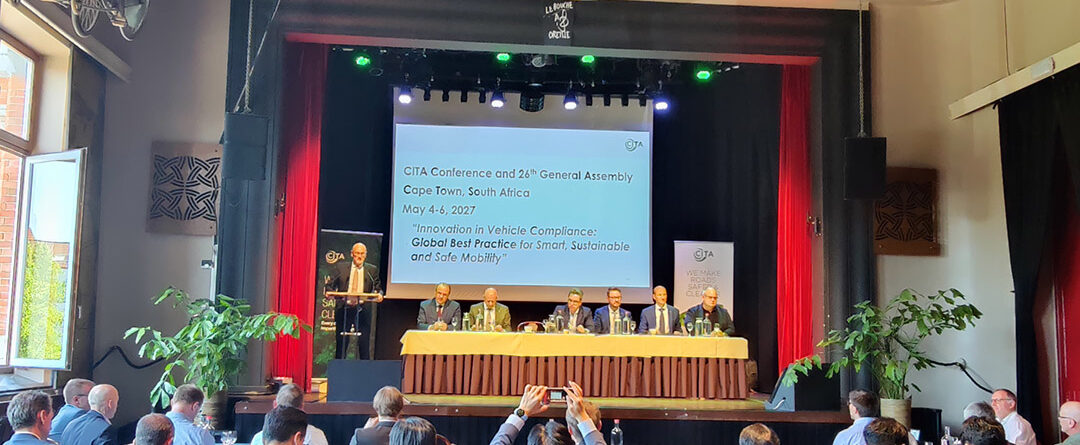
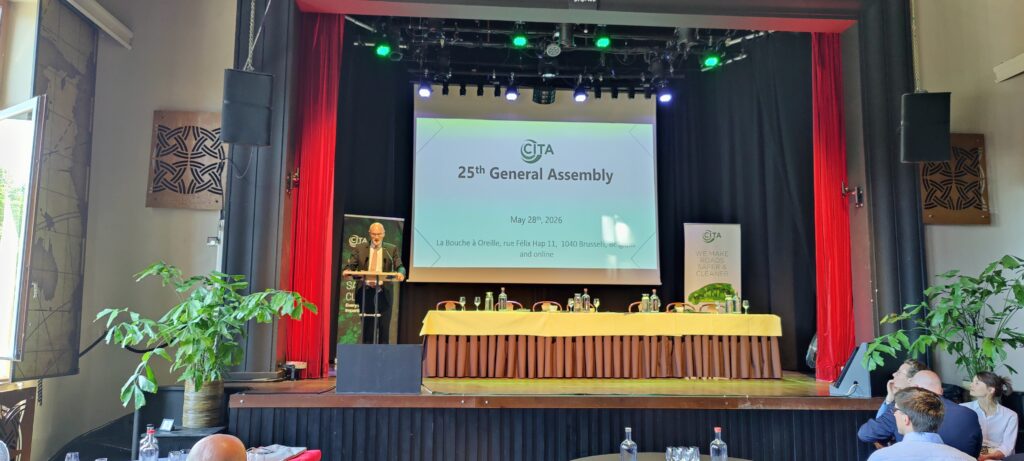
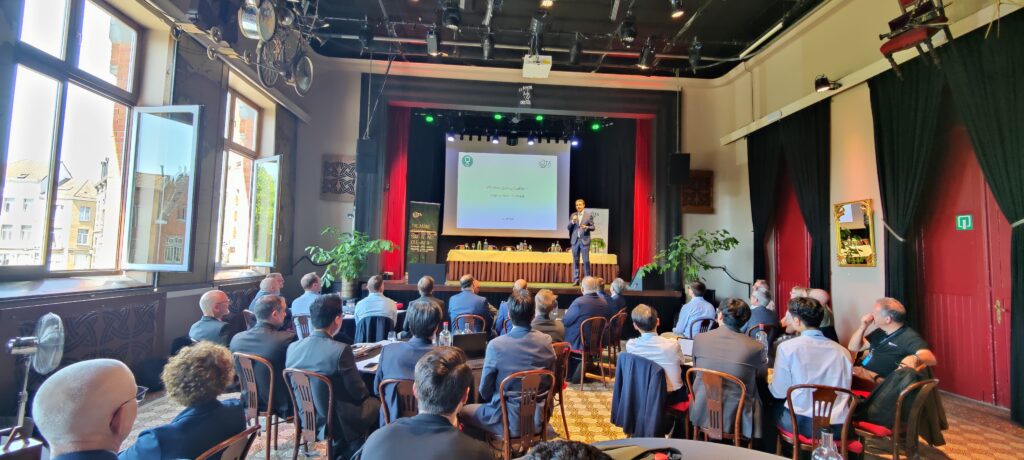
The 25th General Assembly of the CITA was successfully held on 28 May 2026 in Brussels, Belgium, in a hybrid format that enabled members from around the world to participate both in person and remotely. Hosted at Le Bouche à Oreille in Brussels, the Assembly gathered CITA members to discuss the organization's strategic priorities, technical developments and future direction in the field of vehicle compliance and inspection.

The event opened with welcoming remarks from CITA President Gerhard Müller, who highlighted the importance of the 25th General Assembly as a key milestone for the association and underlined the need for continued international cooperation in promoting safe, clean and sustainable mobility. The Assembly also reaffirmed CITA’s commitment to supporting its members through technical expertise, advocacy and global collaboration in an increasingly complex political, technological and societal environment.

The General Assembly was preceded by an informal dinner gathering on 27 May 2026, providing participants attending Brussels with an opportunity to network and exchange experiences ahead of the official program.

During the Assembly, members received reports from the CITA Secretariat, Regional Advisory Groups (RAGs), Topic Areas (TAs) and Task Forces covering a wide range of activities carried out over the past year. Presentations were delivered by representatives including Eduard Fernández, Ferose Oaten, Aitor Retes, Ho Sang Lee, Marcelo Martínez, Charles Ray and Jann Fehlauer, among others.

The Secretariat’s report presented the extensive technical and policy activities undertaken by CITA during the reporting period, including work related to ADAS and automated driving, electric vehicles, emissions, vehicle data access, artificial intelligence, quality assurance, accreditation and the revision of the European Roadworthiness Package. Members were also informed about CITA’s participation in UNECE working groups and European Union regulatory discussions.

Regional reports highlighted the continued growth of CITA’s activities across Africa, Asia-Australasia, Europe, Latin America and North America. Particular attention was given to the increasing engagement of CITA in Africa and Asia, as well as the organisation of regional conferences and technical cooperation initiatives.

The Assembly also reviewed the work carried out within the different Topic Areas, including research and development in vehicle compliance, optimisation of current inspection practices, external affairs, environmental protection systems, and quality, training and confidence.

Several voting procedures took place during the General Assembly. Members approved the provisional agenda, the report of the 24th General Assembly, the 2025 accounts and the 2026–2027 budget. The Assembly also approved modifications to the Articles of Incorporation introducing new procedures for handling ties during elections.

The General Assembly ratified the admission of several new members, reflecting the continued expansion and international reach of CITA. The newly approved members included CENTRALAUTO – TEKNIKA BEREZIAK, DSPACE, FLANDERS MOBILITY AND PUBLIC WORK, IRIS DENT, KEYSIGHT, MASSAR, NANHUA, OPUS INSPECTION Inc., ROAD TRAFFIC SAFETY AGENCY OF THE REPUBLIC OF SERBIA, TURKA and VSCC.

During the elections, Teemu Toivanen was elected as Public Member of the Bureau Permanent, while Lotte Dijkink was elected as Regular Member. Marcin Barankiewicz was elected as Corporate Members’ Representative.

CITA warmly thanked Mr. Geert Konings, who is retiring, for his longstanding commitment and contributions to the association. Over the years, Mr. Konings has dedicated significant time and energy to supporting the mission and work of CITA, and his efforts have been instrumental in advancing the association’s goals.

The Assembly concluded with closing remarks from President Gerhard Müller and an inspirational speech delivered by Sam Gratton. Participants were also invited to the upcoming CITA Conference and 26th General Assembly, which will take place in Cape Town from 4 to 6 May 2027.