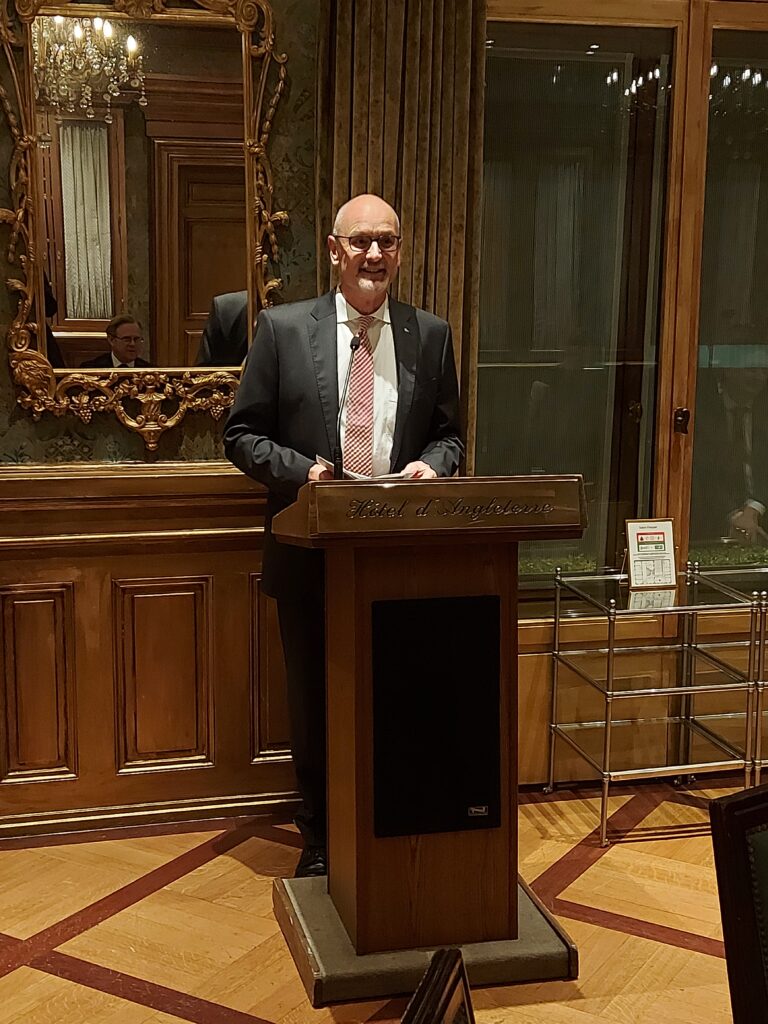
Yesterday, CITA had the privilege of being in the French Ministry of Ecological Transition in Paris, as Secretariat of the Informal Working Group on Electric Vehicles (EV) and Hydrogen Fuel Cell Vehicles (HFCV) Retrofit Systems under UNECE WP.29 for its 8th session.
The discussions focused on advancing a harmonized regulatory framework for the safe and reliable retrofitting of used vehicles with electric and hydrogen powertrains. This work is essential to support the transition to cleaner mobility while ensuring that safety, inspection, and compliance requirements remain robust throughout the vehicle lifecycle.
CITA is proud to contribute to shaping practical and enforceable solutions that will enable sustainable vehicle conversion approval while maintaining roadworthiness and trust in the fleet.
The Ministry of Transport and Communications of Peru (MTC)has taken a significant step towards enhancing its vehicle inspection system by engaging in an exchange of international expertise with CITA. This collaboration reflects a shared commitment to improving road safety, environmental performance, and the overall efficiency of transport systems.
On 9 April 2026, the MTC convened a technical working meeting bringing together specialists in road safety, transport policy, and service management. The session included participation from key national bodies such as the Directorate General for Transport Authorisations, the Directorate for Road Transport Policies and Standards, and the Superintendence of Land Transport of People, Cargo and Goods (SUTRAN), highlighting the country’s integrated and multi-institutional approach to transport governance.
The meeting featured an exchange with Marcelo Martínez, CITA’s representative for Latin America, who shared international best practices and insights on vehicle inspection systems. Discussions focused on the current state of Peru’s technical vehicle inspection framework and identified key challenges and opportunities for improvement.
Participants agreed on several priority areas for strengthening the system. These include updating the regulatory framework, enhancing institutional governance, streamlining operational processes, and reinforcing enforcement and oversight mechanisms. Emphasis was also placed on the importance of adopting international standards to mitigate road safety risks, reduce vehicle emissions, and improve traffic efficiency in urban areas.
The dialogue provided valuable technical input and global perspectives that will support the ongoing evaluation and modernization of Peru’s vehicle inspection system. It also opened the door to potential technical cooperation initiatives between the MTC and CITA, aimed at building a more robust, transparent, and effective inspection regime.
This initiative aligns with the MTC’s broader objective of promoting a safer, more orderly, and sustainable transport system for the benefit of all citizens. Through continued international collaboration, Peru reinforces its commitment to aligning national practices with global standards and advancing road safety outcomes.
25 March 2026 / Abidjan, Ivory Coast | CITA once again contributed to the Diplôme Universitaire Sécurité Routière pour l’Afrique (DUSRA), a road safety diploma programme led by the Université Gustave Eiffel and developed in partnership with CITA. The initiative aims to strengthen road safety expertise across French-speaking African countries by providing specialized training for professionals working in transport and road safety.
The DUSRA programme addresses the urgent need to improve road safety in regions where road traffic injuries remain a major public health and development challenge. It provides a comprehensive training framework covering public road safety policies, infrastructure and engineering, speed management, risk behaviours, prevention measures, accident data analysis and other key aspects of safer mobility systems.
Representing CITA, Mr. Eduard Fernández, Executive Director, delivered lectures to the programme participants through virtual sessions on 12–13 March 2026, followed by a face-to-face lecture on 25 March 2026 in Abidjan, Ivory Coast.
His lectures focused on the role of vehicle regulatory frameworks in improving road safety and covered several key topics:
Regulations for new vehicles – approval and homologation
Regulations for registering new vehicles
Regulations for periodic vehicle inspections
Regulations for mass transport vehicles
Regulations for heavy-duty vehicles
Through these sessions, participants gained insights into the regulatory mechanisms that ensure vehicles entering and operating within the transport system meet safety and compliance requirements.
The DUSRA programme is structured around the five pillars of road safety defined by the World Health Organization—road safety management, safer infrastructure, safer vehicles, safer road users and post-crash response—offering participants a comprehensive and structured understanding of road safety challenges in the specific context of French-speaking African countries.
CITA’s participation in the 2026 edition builds on its continued engagement with the programme. In 2025, Mr. Fernández also contributed to the DUSRA training in Cotonou, Benin, delivering a lecture on best practices in vehicle inspection systems and international cooperation in road safety.
From 17 to 20 February 2026, the international inland transport community gathered at the Palais des Nations in Geneva for the 88th Annual Session of the UNECE Inland Transport Committee (ITC). Held primarily in Room XI and the Assembly Hall, the session took place at a pivotal moment for both the United Nations system and the global transport sector.
Under the high-level theme “Driving Innovation for the Future of Inland Transport”, the session addressed the profound transformation reshaping mobility — from automation and artificial intelligence to digitalization and data-driven governance. The High-Level Policy Segment on 18 February provided an opportunity to reflect on the evolving role of the ITC within the UN80 initiative and to examine how innovation can be responsibly embedded into coherent, science-based and interoperable regulatory frameworks
CITA was represented by its Executive Director, Mr. Eduard Fernández, and its President, Mr. Gerhard Müller, reaffirming the organization's strong commitment to global cooperation in transport safety, compliance and sustainability.
The highlight of the week was the High-Level Policy Segment on 18 February, which brought together Ministers, senior government officials, heads of international organizations and industry leaders. Mr. Gerhard Müller was invited to deliver a high-level intervention during Ministerial Panel I: Innovation and Automation in Inland Transport, alongside key international transport leaders.
In his address to the plenary, Mr. Müller underlined the unique role of the ITC as the only global forum dedicated to inland transport in all its dimensions. He emphasised that:
The ITC has historically driven harmonisation, facilitation of transport, environmental protection and road safety.
WP.29 remains a global public good, providing transparent and science-based regulatory frameworks.
Technological evolution — including automated driving, AI and software-defined vehicles — must be matched by equally robust systems of oversight and compliance.
He stressed that innovation without transparency, accountability and harmonisation risks undermining public trust. Safety and environmental protection, he reaffirmed, must remain non-negotiable pillars of mobility policy.
CITA’s message was clear: technological evolution must become a societal evolution, delivering safer roads, cleaner mobility and responsible innovation.
Later that day, during the VIP Lunch, Mr. Müller delivered a second intervention, focusing on the human dimension of innovation. While acknowledging the extraordinary pace of automation, AI, connectivity and electrification, he reminded participants that mobility is fundamentally a human endeavor. He highlighted four essential principles of a human-centered mobility system:
Protecting people by ensuring safety remains paramount. Empowering people through accessible and inclusive mobility.
Respecting people via transparency in data and technological governance.
Benefiting people through cleaner and more sustainable transport.
He emphasized that public trust is the cornerstone of successful innovation and that CITA’s work in vehicle compliance and roadworthiness continues to evolve alongside emerging technologies, including software-defined vehicles and automated driving systems.
In the evening, during the Ministerial Dinner, Mr. Müller delivered his third speech of the day. Reflecting on the day’s discussions, he praised the spirit of cooperation and cross-border collaboration demonstrated throughout the session. He noted that innovation and automation demand coordination, foresight and trust — and that the ITC provides the indispensable global forum for achieving this. Concluding with sincere appreciation to UNECE, he expressed confidence that international cooperation will continue to guide inland transport safely through its ongoing transformation.
The broader weekly programme included restricted and regular ITC sessions, multistakeholder workshops on the UN Decade of Sustainable Transport, and ministerial-level engagements.
CITA’s active participation reinforced its central role in ensuring that innovation in vehicle technology is matched by innovation in regulation, compliance and oversight. As vehicles become increasingly complex, software-driven and automated, the need for transparent, harmonized and science-based regulatory frameworks becomes even more critical.
CITA stands ready to continue supporting UNECE, ITC and WP.29 in safeguarding safety, environmental protection and public trust.
On 10 June 2025, CITA hosted an exclusive high-level conference under the patronage of the Polish Presidency of the Council of the European Union. Themed “The Roadworthiness Package and the Challenge of Coping with Vehicle Technology,” the event brought together EU policymakers, technical experts, and automotive industry leaders to address how PTI can remain relevant in an era of rapid technological transformation.
Held in Brussels, the conference emphasized the urgent need to adapt regulatory frameworks and inspection methods to ensure continued vehicle safety and environmental compliance, especially with the proliferation of electric vehicles, advanced driver assistance systems (ADAS), and complex on-board electronics.
Opening Remarks The conference opened with a compelling speech by Gerhard Müller, President of CITA, who underlined the critical role of PTI in guaranteeing road safety amid the growing digitalization and automation of vehicles. He highlighted the shared responsibility of institutions, manufacturers, and inspection bodies in maintaining vehicle compliance throughout its life cycle.
Stanisław Bukowiec, Deputy Minister of Infrastructure of Poland, reaffirmed Poland’s commitment to advancing road safety in Europe and praised the cooperation between national governments and international organizations such as CITA.
Expert Presentations The technical session began with four in-depth presentations:
PTI in Poland – Dr. Łukasz Mórawski (ITS) Dr. Mórawski presented a comprehensive overview of the Polish PTI framework, covering inspection procedures, vehicle inspector qualifications, the role of CEPiK (Poland’s vehicle and driver registry), and digital tools like mObywatel 2.0. He emphasized the decentralized yet rigorously supervised nature of Polish inspections, highlighting ongoing efforts to enhance transparency and data integration.
Challenges of Individual Used Vehicle Imports – Tobiasz Mościcki (ITS) Mr. Mościcki examined the difficulties faced during the registration of used vehicles imported from other EU countries due to inconsistent documentation and classification. He advocated for harmonized EU standards and legal clarity for vehicle inspectors, underlining the gap between the ambitions of the Roadworthiness Package and practical realities.
IT Solutions for PTI Centers – Aleksander Ćwiszewski (UNIMETAL Sp. z o.o.) Mr. Ćwiszewski showcased advanced digital tools that streamline operations at PTI centers. His presentation featured integrated inspection systems, data encryption protocols, automated calibration tools, and iSKP—a Polish IT platform ensuring seamless data exchange with governmental systems like CEPiK. These innovations promise increased efficiency, transparency, and legal compliance.
The Inspection of ADAS Systems – Olivier Pletinckx (CITA) Mr. Pletinckx introduced the current work of the CITA ADAS Task Force, presenting multiple technical concepts for assessing ADAS performance during PTI without needing direct access to vehicle ECUs. Concepts ranged from static inspection methods (GTÜ, DEKRA) to dynamic scenario-based approaches (FSD, KÜS, MAHA, DÜRR-KOTSA). Each model was assessed on feasibility, cost, test time, and integration potential—emphasizing the need for standardization and statistical validation.
An engaging debate session followed, with participation from representatives of the Association of Automotive Parts Distributors and Producers (SDCM). The discussion centered on legislative harmonization, data access, and future-proofing PTI methods.
CITA President Gerhard Müller concluded the event by reiterating the need for coordinated EU action to ensure that vehicle inspections evolve alongside technology. He expressed appreciation for the Polish Presidency’s support and encouraged further research and cooperation across borders.
On 28 May 2025, the CITA community gathered in Tokyo, Japan, for a high-level workshop focused on New Technologies and Vehicle Inspection. The event was hosted by the Japan Automobile Standards Internationalization Center (JASIC) in conjunction with the 39th meeting of the Informal Working Group on Periodical Technical Inspection (IWG on PTI), under the auspices of UNECE.
Adapting Vehicle Inspection to Technological Advancements
As vehicle technologies continue evolving toward greater automation and connectivity, the workshop provided a timely platform to address how these advancements impact roadworthiness and inspection regimes worldwide. Discussions emphasized the growing need to ensure vehicle performance remains reliable throughout a vehicle’s life cycle—even as vehicles are increasingly operated across borders and under diverse regulatory frameworks.
CITA Executive Director Eduard Fernández moderated the session, guiding a series of insightful presentations that drew from both global perspectives and national experiences.
Key Highlights from the Agenda:
Mr. Takizawa Fumiya (NALTEC) opened with an overview of Japan’s regulatory approach to automotive safety and its response to advanced technologies.
Mr. François Guichard (UNECE) presented the vision of the World Forum for Harmonization of Vehicle Regulations (WP.29), emphasizing the global dimension of vehicle compliance.
Experts from KOTSA (Korea Transportation Safety Authority) shared recent developments in Korea:
Mr. Sang Woong Park discussed cross-border cooperation with Mongolia.
Mr. Ki Seong Noh outlined updates to Korea’s PTI system.
Mr. Yong Kook Kim presented on diagnostic tool development for vehicle inspection.
Mr. Alejandro Checa (CITA Technical Director) explored the limitations of on-board diagnostics and the need for comprehensive risk analysis to support effective inspection practices.
Mrs. Melissa Archer (UNECE) concluded with updates on the SCUV project and SCUNV Informal Working Group activities, offering insights into future directions for used vehicle regulation.
The following day, participants had the opportunity to visit a state-of-the-art inspection facility, hosted by CITA member NALTEC, to witness firsthand how Japan integrates technology into PTI practices.
We are pleased to announce that the May 2025 edition of the CITA NewsRelease is now available for download.
This edition includes updates on the 24th CITA General Assembly and International Conference in Istanbul, our views on the EC’s Industrial Action Plan, summaries of key events such as the “Future of Mobility” at the European Parliament, recent and upcoming CITA webinars, regional conferences, and much more.
You will also find news on our newest members and contributions from across the CITA community.
The four-day conference was a vibrant platform for presentations, discussions, knowledge exchange, and social networking, fostering collaboration and insight-sharing across borders. Hosted within the frameworks of EReg and EUCARIS—two critical networks focused on the effective exchange of vehicle and driver data—the event showcased innovative projects, regulatory developments, and strategic cooperation on mobility and transport safety.
On the final day of the event, CITA President Gerhard Müller delivered a presentation entitled: "Data to keep vehicles safe and clean: the sovereign cases of roadside and periodical inspection." In his address, Mr. Müller emphasized the vital role of trusted, sovereign data in supporting the efficiency and integrity of both roadside inspections and periodic vehicle inspections. He highlighted how properly governed data can reinforce efforts to maintain high levels of vehicle safety, environmental compliance, and cross-border collaboration.
His presentation aligned perfectly with the broader goals of EReg and EUCARIS—to improve public services and road safety through international cooperation, and to ensure that data exchange serves public interest in a secure, effective, and privacy-conscious way.
CITA’s active participation in this event reaffirms its commitment to international partnerships and policy dialogue. As the global voice for organizations involved in vehicle compliance and inspection, CITA continues to work closely with networks like EReg and EUCARIS to advance shared objectives in the fields of vehicle regulation, data interoperability, and road safety enforcement.
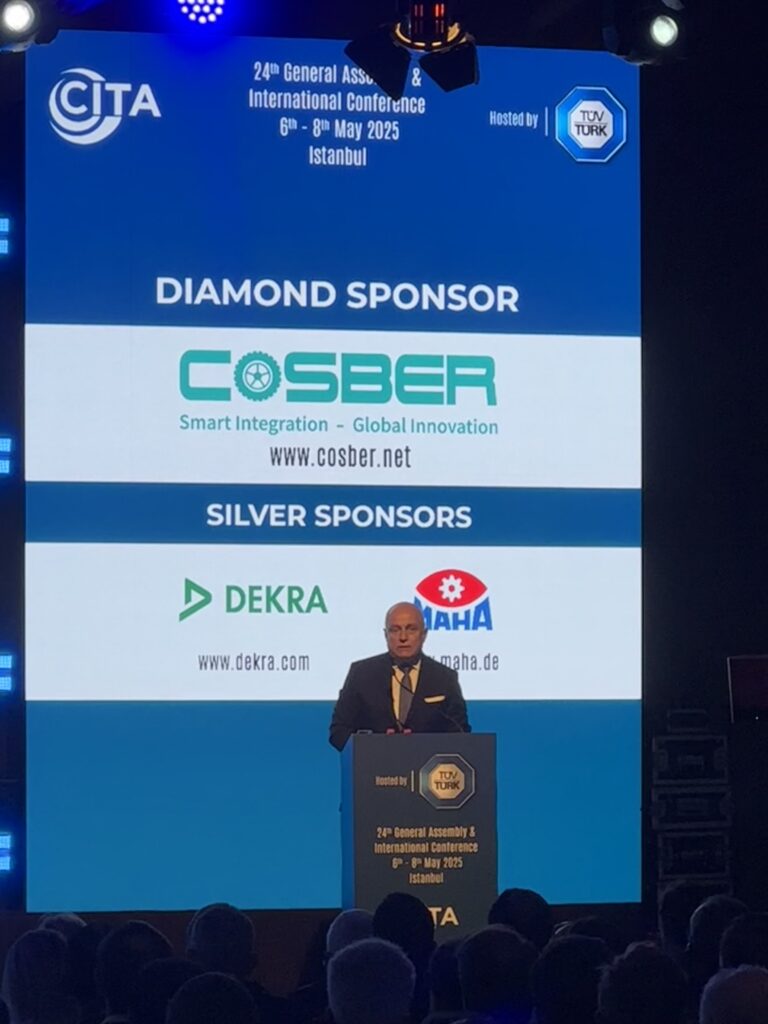
On 6 May 2025, within the prestigious framework of the CITA International Conference hosted by TÜV TÜRK, the 24th General Assembly of CITA took place in Istanbul. The event marked an important milestone in the association's continued mission to improve road safety and environmental protection through vehicle compliance.
New Members Join the CITA Community A highlight of the Assembly was the formal admission of new CITA members, reflecting the organization's expanding global reach and influence. The following organizations were officially welcomed into the CITA family (listed in alphabetical order):
AUTOTEST GROUP EODD
AVILOO
CAPATEST
CONTROLAUTO
DKT
EMIRATES GENERAL TRANSPORT AND SERVICE COMPANY
Færdselsstyrelsen
KNESTEL
INSTITUTO DA MOBILIDADE E DOS TRANSPORTES
MASVIK
PINJA
ROHDE AND SCHWARZ
SCALE MT
VTEQ ( upgraded membership category in Full Corporate Member)
ZEMIC
Changes in the CITA Bureau Permanent Significant updates were made to the CITA Bureau Permanent (BP), the executive body of the organization. Two new members were elected:
Mr. Marian Rybiansky, Managing Director and Chairman of the Board of TESTEK a.s., and Chairman of the CITA Task Force on Brakes
Mr. Jungsoo Park, Deputy General Manager at the Korea Transportation Safety Authority
Additionally, Mr. Marcin Barankiewicz was elected by the corporate members as the new Corporate Member Representative in the CITA Bureau Permanent. Mr. George Petelet was reconfirmed as the Corporate Member Deputy Representative.
Marian RybianskyJungsoo ParkMarcin Barankiewicz
The Assembly also marked a leadership transition, as Mr. Lothar Geilen, a valued CITA Board member since 2013 and Vice President Treasurer since 2017, stepped down due to retirement. CITA expressed its deep gratitude for his years of dedicated service.
Taking up the role of CITA Vice President Treasurer is Mrs. Ferose Oaten, reaffirming her commitment and leadership within the organization.
Composition of the New CITA Bureau Permanent The new composition of the CITA Bureau Permanent following the 24th General Assembly is as follows:
Gerhard Müller – CITA President
Aitor Retes – CITA Vice President General Secretary
Ferose Oaten – CITA Vice President Treasurer (re-elected)
Pascal Buekenhoudt – CITA Vice President Technical Affairs (re-elected)
Geert Konings
Christoph Nolte (re-elected)
Jungsoo Park
Marian Rybiansky
Jorge Soriano (re-elected)
Teemu Toivanen – Public Member Representative
New CITA Bureau Permanent
CITA Activity Reports Presented During the General Assembly, members also had the opportunity to review and discuss several reports highlighting CITA’s recent activities, strategic initiatives, and technical developments. These presentations, made by leaders of CITA RAGs and Topic Areas, underscored the organization’s commitment to continuous improvement and knowledge sharing across the vehicle compliance and road safety sectors.
The Assembly reaffirmed CITA’s role as a leading voice in the vehicle compliance sector, with renewed leadership and a growing, diverse membership ready to tackle global mobility challenges.
From May 6–8, 2025, Istanbul welcomed delegates from around the world for the CITA International Conference, hosted with exceptional professionalism and warmth by TÜV TÜRK. This year’s theme, “Forging Global Alliances for Safer Roads and a Greener Future,” framed three days of insightful dialogue, global cooperation, and technical exchange at a pivotal time for the roadworthiness and vehicle compliance community.
The event commenced with the 24th CITA General Assembly, held on May 6, where CITA President Gerhard Müller opened the proceedings by warmly welcoming CITA members and global delegates.
He highlighted the critical need for continued action toward road safety and vehicle environmental compliance, especially as the world approaches the mid-term mark of the Global Plan for the Decade of Action for Road Safety 2021–2030. In his words, “We must continue to emphasize the role of vehicle compliance to make our roads safer and cleaner”.
A focused article on the Assembly will follow.
The opening of the international conference on May 7 featured a high-level Plenary Session 1 with welcoming addresses by:
Gerhard Müller, CITA President
Kemal Ören, CEO of TÜV TÜRK
Patrick Fruth, CEO of TÜV SÜD Division Mobility
Murat Baştor, General Manager, Turkish Ministry of Transport and Infrastructure
Their collective messages emphasized international collaboration, regulatory consistency, and the role of innovation in transforming mobility for safety and sustainability.
President Müller extended heartfelt thanks to the host TÜV TÜRK, particularly COO Koray Özcan, whose contributions were instrumental. Gratitude was also extended to the sponsors: Diamond sponsor COSBER, Silver sponsors MAHA and DEKRA, and event supporters VTEQ and Midtronics.
Following the opening plenary, Plenary Sessions 2 and 3 explored the Turkish PTI success story and featured impactful keynote speeches.
Experts such as Peter Szatmari (EU Commission DG MOVE), Richard Damm (KBA), Walter Nissler (BMK), and Spiros Voyadzis (PFD) discussed the evolving legislative landscape, technology’s role in inspections, and international cooperation on used vehicles.
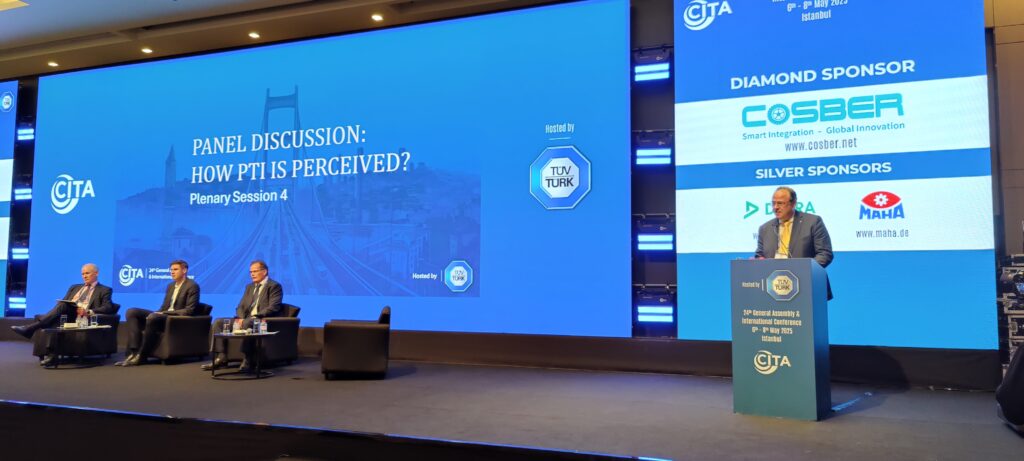
Plenary Session 4, held on the afternoon of May 7, focused on the theme "How PTI is Perceived?" and was structured as a dynamic panel discussion. The session, framed by Eduard Fernández - CITA Executive Director, saw Mervyn Edwards (TRL) presenting the relationship between vehicle defects identified in periodic inspections and those found in collision analyses. Session's panelists included Guillermo Magaz (AECA-ITV), Richard Goebelt (TÜV-Verband), and Mervyn Edwards (TRL), who provided a range of perspectives on public perception, data reliability, and regulatory approaches.
Throughout the conference, attendees also engaged in focused split sessions on:
Vehicle compliance in low- and middle-income countries (LMIC) - Leaded by: Ferose Oaten, AVTS
New technologies and data management - Leaded by: Fred Blüthner, FSD
Environmental protection - Leaded by: Thomas Ost, DEKRA
Inspection procedures and methods - Leaded by: Olivier Pletinckx, CITA
Electric powertrains - Leaded by: Víctor Salvachúa, APPLUS ITEUVE
Decarbonization - Leaded by: Eduard Fernández, CITA
Vehicle approval - Leaded by: Alejandro Checa, CITA
These sessions facilitated cross-border learning and highlighted CITA’s vital role as a global platform for advancing vehicle inspection standards.
On the final day, Plenary Session 5 brought the conference to a close with a summary of the key outcomes from all technical split sessions. This comprehensive wrap-up, followed by closing remarks from President Gerhard Müller, who praised the collaborative spirit and reaffirmed CITA’s commitment to independent, fair, and modern vehicle inspections.
He noted, “We are not only a fraction of the solution, but more than that, we are a precondition” for safer roads and cleaner air.
He once again extended sincere appreciation to TÜV TÜRK, the event sponsors, the speakers, and the CITA office team, recognizing their indispensable role in the success of the event.
As CITA continues to expand its impact, the 2025 Conference in Istanbul stood as a powerful reminder of the importance of international cooperation, innovation, and commitment in creating safer and more sustainable transport systems worldwide.
We thank all who joined us in Istanbul and look forward to our continued work together.
To provide the best experiences, we use technologies like cookies to store and/or access device information. Consenting to these technologies will allow us to process data such as browsing behaviour or unique IDs on this site. Not consenting or withdrawing consent, may adversely affect certain features and functions.
Functional
Always active
The technical storage or access is strictly necessary for the legitimate purpose of enabling the use of a specific service explicitly requested by the subscriber or user, or for the sole purpose of carrying out the transmission of a communication over an electronic communications network.
Preferences
The technical storage or access is necessary for the legitimate purpose of storing preferences that are not requested by the subscriber or user.
Statistics
The technical storage or access that is used exclusively for statistical purposes.The technical storage or access that is used exclusively for anonymous statistical purposes. Without a subpoena, voluntary compliance on the part of your Internet Service Provider, or additional records from a third party, information stored or retrieved for this purpose alone cannot usually be used to identify you.
Marketing
The technical storage or access is required to create user profiles to send advertising, or to track the user on a website or across several websites for similar marketing purposes.
To provide the best experiences, we use technologies like cookies to store and/or access device information. Consenting to these technologies will allow us to process data such as browsing behaviour or unique IDs on this site. Not consenting or withdrawing consent, may adversely affect certain features and functions.
Functional
Always active
The technical storage or access is strictly necessary for the legitimate purpose of enabling the use of a specific service explicitly requested by the subscriber or user, or for the sole purpose of carrying out the transmission of a communication over an electronic communications network.
Preferences
The technical storage or access is necessary for the legitimate purpose of storing preferences that are not requested by the subscriber or user.
Statistics
The technical storage or access that is used exclusively for statistical purposes.The technical storage or access that is used exclusively for anonymous statistical purposes. Without a subpoena, voluntary compliance on the part of your Internet Service Provider, or additional records from a third party, information stored or retrieved for this purpose alone cannot usually be used to identify you.
Marketing
The technical storage or access is required to create user profiles to send advertising, or to track the user on a website or across several websites for similar marketing purposes.