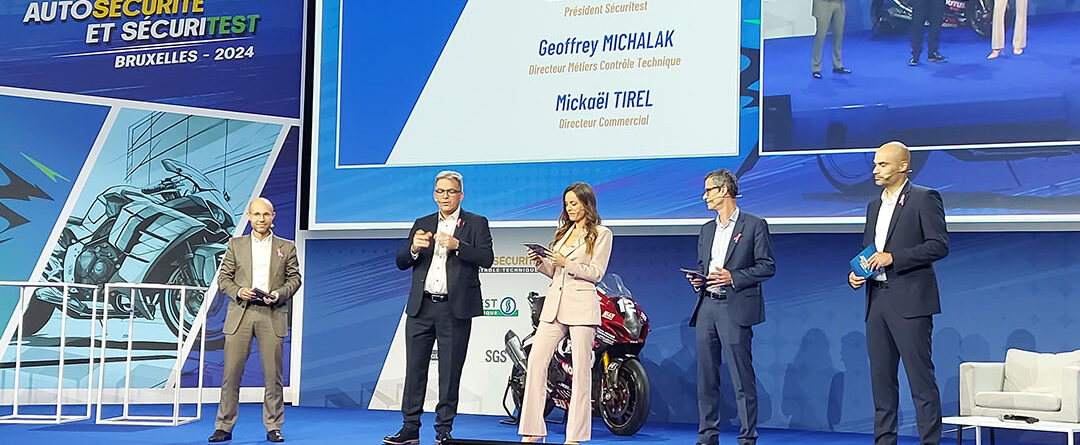
The SGS Convention, held on October 12, 2024, in Brussels, brought together employees and franchised companies from across France for an afternoon of key discussions and networking. The event focused on the latest advancements in the technical control of two-wheeled vehicles, an increasingly important issue across Europe.
A highlight of the convention was the participation of Mr. Eduard Fernández, Executive Director of CITA, who engaged in a Q&A session. He provided an overview of CITA and shared updates on European directives affecting vehicle inspections.
Mr. Fernández emphasized that some countries have successfully implemented motorcycle inspection programs, improving safety, vehicle maintenance, and reducing pollution. He also addressed the ongoing revisions to the European directive on vehicle inspections, which aim to expand safety checks, emissions testing, and data-sharing among member states.
The 14th Florence Intermodal Forum, which took place on 11 October 2024 at Villa Schifanoia in Florence, brought together key stakeholders to discuss road safety and the utilization of data generated by connected vehicles for the public good. The event was co-organized by the Florence School of Regulation’s Transport Area, the European Commission's DG MOVE, and DG GROW, and centred around critical questions regarding how vehicle data can be harnessed to enhance road safety across Europe.
Gerhard Müller, the President of CITA, made a significant contribution to the discussion with his presentation, in which he introduced CITA's work and underscored the pivotal role of data access for vehicle inspections. Müller emphasized that data is crucial for evaluating both safety and emissions behaviour in vehicles, which are critical to the development of safer and more environmentally responsible transport systems.
During the subsequent discussion, Müller expanded on key issues regarding data ownership, vehicle automation, and the need for coherent legislation across Europe. He clarified that, generally, drivers own the data generated by their vehicles, not the OEMs. This distinction is important as it reflects a need for clear frameworks to protect drivers' rights while ensuring the responsible use of data in public safety initiatives.
One of Müller’s key messages was the call for at least EU-wide legislation to govern these developments, noting that national-level legislation would be insufficient. With vehicles crossing borders and new technologies rapidly evolving, a unified European approach is necessary to create consistent standards across the EU.
Müller also stressed the need to balance competitiveness with safety. He argued that the better the automated functions of vehicles are, and the safer European vehicles become, the more competitive they will be on the global market. By focusing on safety improvements, European vehicles can not only protect their users but also maintain a strong competitive edge.
Finally, Müller called for European legislation to become more flexible and quicker in its response to the fast pace of technological advancements in modern vehicles. The automotive industry is evolving rapidly, and legislation needs to keep up to ensure safety while fostering innovation.
On October 4th, a technical exchange took place in Catania, Italy, organized by FederIspettori who hosted the Finnish association Yksityisten Katsastustoimipaikkojen Liitto ry, presided over by Björn Ziessler. This event underscored the value of international cooperation and shared learning within the vehicle inspection sector, highlighting the fruitful relationship fostered through both associations' membership in the CITA. It is thanks to CITA that such meaningful exchanges become possible, promoting shared standards and collaboration across borders.
The first phase of the exchange involved an in-depth presentation by FederIspettori on the Italian vehicle inspection system, including an honest overview of its critical points and challenges. The event then shifted to the practical side, featuring visits to key inspection facilities in the Catania area. The delegation started by visiting a light vehicle inspection center, followed by a visit to the Motorizzazione Civile of Catania. In the afternoon, the group continued their exploration by visiting a heavy vehicle inspection center, offering a more comprehensive view of how vehicle inspections are managed across different sectors in Italy.
Special thanks go out to all partners who generously made their facilities available for these visits (Regione Sicilia for granting access to the Motorizzazione Civile of Catania, Revauto Srl for the heavy vehicle inspection center, and Centro Revisioni Pit Stop Sorbello for hosting the light vehicle inspection line) and the impeccable organization and hospitality of the Sicily section of FederIspettori.
The Instituto da Mobilidade e dos Transportes, I.P. (IMT, I.P.)'s mission is to exercise technical regulation, licensing, coordination, inspection and planning functions in the field of land and river transport and their respective infrastructures, as well as in the economic aspect of commercial ports and maritime transport sector.
In the field of land transport it’s main activities are:
Authorise public passenger transport services;
Authorise, license and supervise the exercise of land transport and complementary activities, including coordinating the licensing process and the management of platforms and other logistics facilities, under the terms of the applicable legislation;
Certifying land transport professionals and promoting driver licensing, recognising, licensing and supervising the training and examination centers subject to its supervision;
Define the conditions for issuing, revalidating, exchanging and seizing driving licences and professional certificates.
Monitoring the application of social regulations in the field of road transport, as the national authority responsible for implementing the respective control instruments (tachographs);
Approving, homologating and certifying vehicles and equipment used in land transport systems, guaranteeing the required technical and safety standards, licensing the entities involved in the certification and inspection processes;
Promoting technical improvements in road and rail vehicles, with the aim of improving safety and efficiency in the operation of road and rail transport, interoperability and reducing negative environmental impacts.
Ensuring the management of national registers in the transport sector, namely of vehicles, inspection centres, drivers, driving schools, transport companies and complementary activities, public passenger transport services and transport professionals, and railway infrastructures;
Managing the standards and processes of the electronic vehicle identification system;
As the EU prepares for its new institutional mandate, CITA is dedicated to ensuring that emerging vehicle technologies drive a safer, cleaner, and more efficient road transport system. With vehicles playing a crucial role in society and the economy, we are at a pivotal moment to maximize technological advancements while addressing key challenges in road safety and sustainability.
A Regulatory Framework for the Future
The upcoming EU mandate will shape how vehicle technologies influence Europe's transport landscape. CITA calls for a regulatory framework aligned with the UN Sustainable Development Goals, Vision Zero, and climate action, focusing on these key areas:
Comprehensive Vehicle Oversight The European Commission must establish necessary structures to provide a coordinated and comprehensive overview of vehicle regulation throughout their legal lifespan. This approach ensures that vehicles remain compliant with safety and environmental standards, from production to end-of-life.
Integrated Decarbonization and Safety Decarbonization efforts must consider road safety and emission controls to protect both people and the environment.
Support for New Technologies A strong regulatory framework is needed to ensure the safe and harmonized implementation of new technologies across the EU.
Fair Access to Vehicle Data Ensuring equitable, cost-free access to vehicle systems and data for essential government functions, including approval and inspection processes.
Risk-Based Vehicle Regulation A smarter approach to regulation should focus on vehicle risks, such as age and condition, ensuring that higher-risk vehicles are prioritized.
Addressing New Transport Modes Regulatory frameworks must incorporate emerging transport modes, such as micromobility, to ensure their safe integration.
Key Priorities for the Next Five Years
Vehicle self-diagnosis systems like ADAS are essential but insufficient for full compliance. In the next mandate, CITA recommends:
Transparency in Electric Vehicle Fleets Develop impartial assessments of electric vehicle batteries, especially their state of health, to ensure fleet electrification progresses responsibly.
Evaluation of Advanced Driving Systems Create reliable, impartial methods to assess ADAS and autonomous systems throughout a vehicle's lifespan to maintain safety standards.
Finalizing the Roadworthiness Package Complete the development of particle and nitrogen oxide emission testing to ensure vehicles meet environmental standards.
CITA is committed to collaborating with policymakers and industry stakeholders to build a regulatory environment that balances innovation with safety and sustainability.
By addressing the critical issues outlined in this manifesto, we believe the next EU mandate can unlock the full potential of new vehicle technologies while making significant strides toward achieving Europe’s sustainability and road safety goals.
Last week, on 12 September 2024, FSD Fahrzeugsystemdaten GmbH - Zentrale Stelle marked its 20th anniversary in Radeberg, Germany, with a symposium titled "The Modern Main Inspection and New Vehicle Technologies." The event gathered key figures from the automotive inspection sector to discuss the impact of new vehicle technologies on periodic technical inspection (PTI).
Notable attendees included Richard Damm from the Federal Motor Transport Authority (KBA), State Secretary Fröhlich from the Saxon State Ministry of Economic Affairs, managers from major testing organizations, German OEMs, academic representatives, and international delegates from Luxembourg and South Korea, including the Director of KAVIC.
A highlight was the participation of CITA President Gerhard MÜLLER, who delivered a speech on the global importance of PTI, emphasizing the need for international collaboration in adapting to advanced vehicle technologies. The CITA Executive Director Eduard FERNÁNDEZ was also in attendance, reinforcing the organization's role in shaping the future of global inspection standards.
The symposium explored innovations like electric vehicles and autonomous systems, showcasing FSD’s leadership in developing data-driven solutions for evolving vehicle inspections. As technology advances, FSD remains a key player in ensuring road safety and compliance.
On 12 September 2024, CITA welcomed a delegation of six senior officials from Benin's Ministry of Transport, accompanied by two experts, to its Brussels facility for training on Periodic Technical Inspections (PTI) and future hybrid/electric vehicle inspections.
Led by Mr. Olivier Pletinckx, CITA's Technical Manager, the training focused on the evolving challenges of inspecting electric vehicles and ensuring their roadworthiness. The delegation is currently pursuing a Master II in Road Safety (DUSRA) at Université Gustave Eiffel in Aix-Marseille, France, and this program extended their academic learning with practical insights into modern vehicle inspection protocols.
This initiative underscores Benin's commitment to improving road safety and adapting to new vehicle technologies, while highlighting CITA’s role in fostering international collaboration and knowledge sharing in the transport sector.
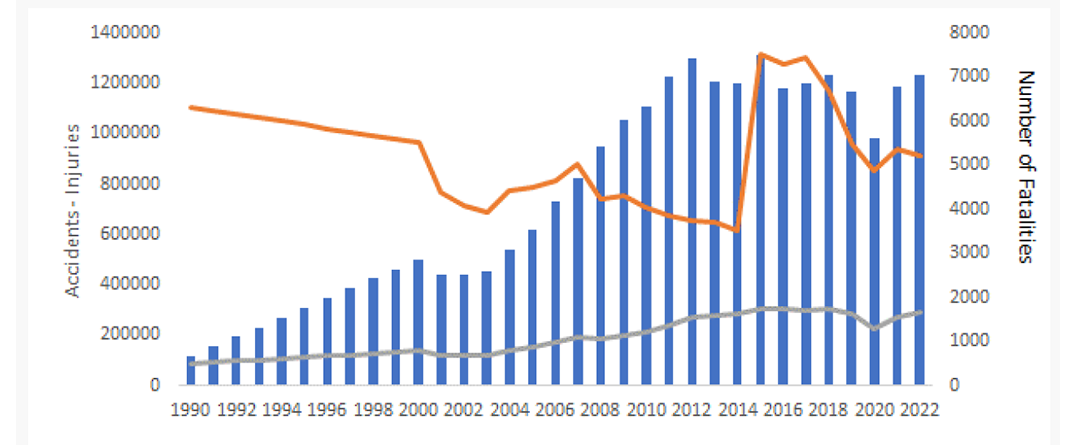
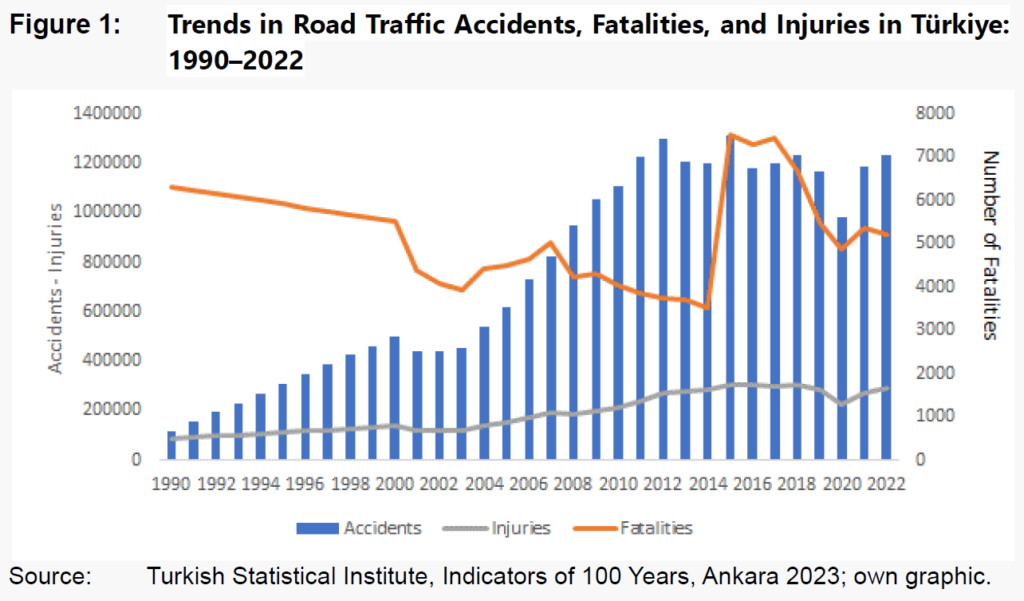
The Institute for Economic Research and Consulting GmbH recently published a detailed study evaluating the efficacy of Periodic Technical Inspections (PTI) on road safety and economic outcomes in Turkey, covering data from 1990 to 2022. This comprehensive analysis, spearheaded by Prof. Dr. Wolfgang H. Schulz and his team, delves into the multifaceted impacts of PTIs, employing robust datasets and econometric models to provide insightful conclusions.
Aim and Scope / The primary objective of the study is to ascertain the effectiveness of PTIs in enhancing road safety and mitigating economic losses associated with traffic accidents in Turkey. By leveraging extensive datasets and various analytical methods, the study offers a thorough examination of how periodic vehicle inspections contribute to reducing road accidents and improving economic outcomes.
Methodology / The study employs four distinct methods to evaluate the impact of PTIs:
Literature Analysis: A comprehensive review of existing research on the relationship between vehicle inspections and road safety.
Visual Analysis: Examination of trend developments over time to identify any significant changes.
Autoregressive Processes: Analysis to detect patterns and shifts in the data.
Chow Test: Statistical verification of structural breaks in the dataset, particularly around significant policy changes such as the introduction of PTIs in 2008.
Key Findings / The study's literature analysis reveals a generally positive correlation between PTIs and improved road safety. Significant reductions in accidents and fatalities have been observed in regions implementing stringent vehicle inspection regimes. Notably, the analysis of PTI implementation in Turkey indicates a structural break in 2008, suggesting that the introduction of PTIs significantly altered the trajectory of road safety metrics. On average, the share of deaths related to fatal accidents is 0.03766. With this, 5,033 deaths could be avoided. The share of injuries per fatal accident is, on average, 1.6429, which means that 219,498 injuries could be avoided.
Trend Analysis / From 1990 to 2022, the dataset provides a comprehensive overview of road traffic accidents, fatalities, and injuries in Turkey. The analysis indicates a marked reduction in fatalities and injuries post-2008, despite an initial increase in the number of accidents. This paradoxical trend underscores the efficacy of PTIs in mitigating the severity of accidents.
Economic Impact / The economic analysis within the study highlights significant cost savings attributed to the implementation of PTIs. The average annual savings amount to approximately 1.5 billion TL, with total savings from 2008 to 2022 estimated at 22.48 billion TL. These savings underscore the economic viability of PTIs, reinforcing their role in reducing the financial burden of road accidents on society.
Regression Analysis and Chow Test / The regression models demonstrate strong relationships between the implementation of PTIs and improvements in traffic safety. The Chow test confirms the presence of a structural break in 2008, validating the significant impact of PTIs on road safety metrics in Turkey.
Conclusions and Recommendations / The study concludes that PTIs have been highly effective in improving road safety and delivering substantial economic benefits in Turkey.
Key recommendations include:
Enhanced PTI Frequency and Coverage: Increasing the frequency and coverage of PTIs to capture and mitigate vehicle deficiencies more effectively.
Integration with Other Safety Measures: Incorporating PTIs into a broader road safety strategy that includes driver education, infrastructure improvements, and stricter enforcement of traffic laws.
Longitudinal Studies: Conducting further research to track the long-term effects of PTIs on road safety and economic factors.
Comparative Analysis: Benchmarking Türkiye's PTI practices against other countries with similar traffic conditions to refine and improve inspection protocols.
Policy Adaptation: Updating PTI criteria and techniques to address new safety challenges and technological advancements in automotive design.
Future Implications / The success of the PTI program in Turkey suggests its continued importance in maintaining and enhancing road safety. Ongoing adaptation and integration with other safety measures will be crucial in sustaining and building on the improvements achieved thus far.
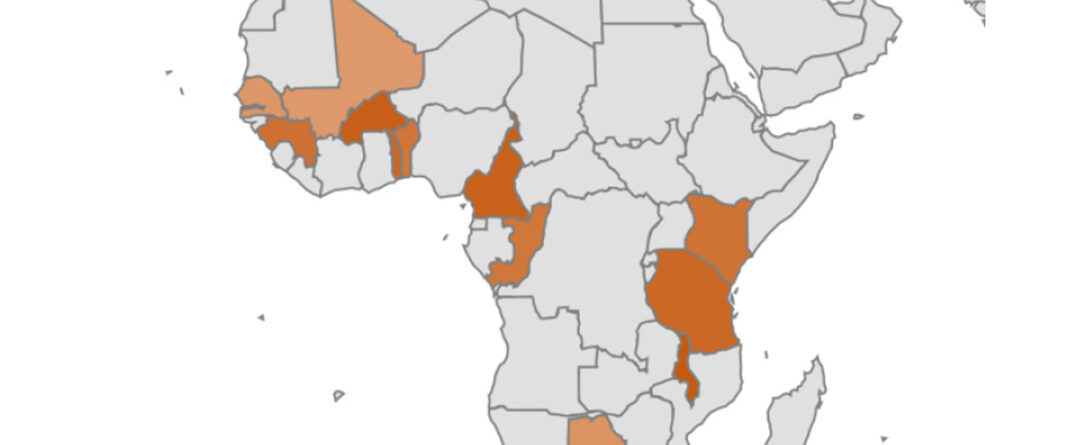
CITA has published new findings from a comprehensive study evaluating the African Road Safety Action Plan, developed by the United Nations Economic Commission for Africa (UNECA). The study, conducted by researchers Dominique Mignot, Laurent Carnis, Eduard Fernandez, Davide-Shingo Usami, and Ruth Welsh, highlights the critical challenges and progress in road safety across the African continent.
The research, which aims to contribute to the improvement of road safety in Africa, reveals that despite some advancements, significant challenges remain. The mid-term evaluation of the UNECA Action Plan indicates that the expected results are not being fully realized, with progress being uneven across different pillars of road safety.
KEY FINDINGS
Road Safety Management: The study identifies weaknesses in road safety management, including poor institutional organization and coordination, inadequate policy implementation, and insufficient funding. Only a few countries like Burkina Faso and South Africa show relatively good performance, while many others lag behind.
Safer Roads and Mobility: The implementation of road safety audits and inspections is progressing slowly. Few countries have developed technical guidelines for road safety audits and inspections, which are crucial for improving road infrastructure safety.
Safer Vehicles: While vehicle inspection is widespread, the quality and regional spread of inspections are inconsistent. The study recommends encouraging the importation of safer vehicles through the application of standards and improving the roadworthiness of both new and used vehicles.
Safer Road Users: There has been some progress in promoting road safety among young people, but much work remains. The use of child restraints and education on safe road user behavior are areas needing significant improvement.
Post-Crash Response: The capacity for post-crash response, including emergency medical services and trauma care, is generally inadequate. The study emphasizes the need for better-equipped ambulances, improved emergency medical services, and the development of trauma care facilities.
RECOMMENDATIONS
The study proposes several recommendations to enhance road safety in Africa:
Strengthen the institutional framework and allocate adequate resources for road safety policies.
Develop consistent and systematic data collection systems to inform public policies.
Promote the use of child restraints through legislation and public awareness campaigns.
Improve the technical capacity for road safety audits and inspections.
Ensure the availability of quality spare parts and a network of qualified repair and maintenance workshops.
Enhance cooperation with non-governmental organizations (NGOs) and the private sector.
Eduard Fernandez, representing CITA, emphasized the importance of these recommendations, stating, "Effective implementation of these measures is crucial for saving lives and improving road safety across Africa. CITA remains committed to supporting African countries in their efforts to enhance road safety."
To provide the best experiences, we use technologies like cookies to store and/or access device information. Consenting to these technologies will allow us to process data such as browsing behaviour or unique IDs on this site. Not consenting or withdrawing consent, may adversely affect certain features and functions.
Functional
Always active
The technical storage or access is strictly necessary for the legitimate purpose of enabling the use of a specific service explicitly requested by the subscriber or user, or for the sole purpose of carrying out the transmission of a communication over an electronic communications network.
Preferences
The technical storage or access is necessary for the legitimate purpose of storing preferences that are not requested by the subscriber or user.
Statistics
The technical storage or access that is used exclusively for statistical purposes.The technical storage or access that is used exclusively for anonymous statistical purposes. Without a subpoena, voluntary compliance on the part of your Internet Service Provider, or additional records from a third party, information stored or retrieved for this purpose alone cannot usually be used to identify you.
Marketing
The technical storage or access is required to create user profiles to send advertising, or to track the user on a website or across several websites for similar marketing purposes.