At Keysight (NYSE: KEYS), we inspire and empower innovators to bring world-changing technologies to life. As an S&P 500 company, we're delivering market-leading design, emulation, and test solutions to help engineers develop and deploy faster, with less risk, throughout the entire product life cycle. We're a global innovation partner enabling customers in communications, industrial automation, aerospace and defense, automotive, semiconductor, and general electronics markets to accelerate innovation to connect and secure the world.
Keysight’s Automotive and Energy Solutions team offers a comprehensive ecosystem of automotive design, development, validation, and cybersecurity solutions — enabling automakers and suppliers to accelerate innovation from early design to full-scale deployment. Through high-fidelity simulation, automated compliance testing, and real-world performance insights, Keysight helps next-generation vehicles to be engineered faster, safer, and more securely.
The Danish Road Traffic Authority (Færdselsstyrelsen) is the governmental body responsible for road safety – ensuring both safe mobility for all and a sustainable transport industry.
As the Danish authority on RSI and PTI, vehicle type approval, driving licenses, vehicle requirements, permits, and inspections of all kinds we have a widespread operation and are in touch with almost every car owner and transportation professional at some point. Furthermore, the Danish Road Traffic Authority is also responsible for PTI and vehicle requirements in Greenland.
Through dedicated management and operation, the Danish Road Traffic Authority works to make road traffic safe and sustainable and puts in a continuous effort to make our processes meaningful and efficient.
The 2025 CITA Regional Advisory Group (RAG) Asia/Australasia Web Conference took place on Tuesday, 9 December 2025, gathering members from across the region for a focused, content-rich session dedicated to improving vehicle inspection systems and strengthening road safety. Held virtually via Zoom, this members-only event explored the year’s theme: “AA’s efforts for better Vehicle Inspection for a Safer and Cleaner Tomorrow.”
The conference brought together leading experts, regulators, and technology providers who shared the latest developments in inspection practices, innovations in ADAS and EV testing, and evolving challenges in ensuring life-cycle compliance of vehicles worldwide.
Moderated by Mr. TaeGyun Ki (KOTSA) and Mr. Eduard Fernández (CITA), the event opened with welcoming remarks from Mr. Hosang Lee (KOTSA) and CITA President Mr. Gerard Müller, who emphasized the importance of international cooperation and continuous knowledge exchange to support high-performing and future-oriented PTI systems.
The first presentation offered an in-depth overview of South Korea’s ongoing work to modernize electric vehicle inspections. Mr. Hyunjun Kim presented results from field validation tests conducted at KOTSA’s Busan Haeundae inspection station, where newly developed metrological EV inspection tools—such as automated charging inlet insulation testers, AVAS measurement equipment, and dynamic EV battery load test devices—were deployed and assessed.
These tools aim to transition EV inspections from basic visual and diagnostic checks toward quantitative, performance-based verification, improving accuracy and safety. The presentation also highlighted test data from a fleet of high-mileage electric light trucks and demonstrated how standardized equipment could support reliable life-cycle EV compliance.
Dr. Samer Galal provided a comprehensive analysis of the growing influence of Advanced Driver Assistance Systems (ADAS) on road safety, focusing on the need for PTI systems to adapt accordingly. He emphasized that as ADAS becomes mandatory in new vehicles across many regions, PTI must evolve to ensure continued system functionality throughout the vehicle’s lifetime.
Mr. Olivier Pletinckx presented the latest developments from the CITA Task Force on ADAS, including its ongoing work to evaluate inspection concepts—both static and dynamic—for future PTI processes. The TF continues its work into 2026 as it refines inspection requirements, evaluates technical solutions, and prepares guidance for global stakeholders.
KOTSA introduced the KADAS (Korea Automated Driving Assessment System) project, an innovative initiative to assess the functional performance of ADAS and autonomous driving features using a controlled, scenario-based testing platform. Mr. Changwhan Choi presented experimental results involving several vehicle brands and sensor configurations, demonstrating how KADAS can identify system performance issues and contribute to safer automated driving deployment.
The final presentation addressed emissions testing, focusing on Germany’s experience with large-scale deployment of particle number (PN) measurement equipment. Mr. Peter Schwanzer, Scale MT in his presentation highlighted how robust PN testing can significantly improve air quality by identifying vehicles with malfunctioning particulate filters.
The conference concluded with a Q&A session, followed by closing remarks from Mr. Hosang Lee and CITA President Mr. Gerard Müller, who thanked all participants for their active engagement and commitment to strengthening vehicle inspection across the Asia/Australasia region.
The discussions reaffirmed the need for continuous innovation, harmonization of testing strategies, and strong partnerships—key drivers in achieving safer roads and reducing environmental impacts across the region.
CITA actively contributed to the 2025 ASEAN + China Road Safety Capacity Building Workshop, held from 25 to 27 November in Shenzhen, China. Co-hosted by WHO, UNECE, CITA, Global NCAP, CATARC, and MIROS, the workshop aimed to strengthen the capacity of ASEAN Member States and China to enhance road safety by aligning vehicle safety legislation, inspection systems, and regulatory practices with international standards.
Over three days, participants explored priority vehicle safety regulations, PTI implementation models, NCAP developments, and the impact of emerging technologies on national safety frameworks. The program combined high-level presentations, panel discussions, technical exchanges, and group breakout sessions designed to support the adoption and implementation of UN vehicle safety regulations across the region.
CITA was represented by its Executive Director, Mr. Eduard Fernández, who played a central role in several sessions across the workshop.
The first day covered priority vehicle safety regulations in the morning, followed by a full afternoon module dedicated to PTI. Mr. Fernández delivered two key contributions:
“The Challenges of Vehicle Inspection”, outlining the technical, institutional, and operational constraints faced by countries developing or reforming PTI systems.
“PTI Governance”, emphasizing the importance of transparent governance models, oversight mechanisms, and regulatory alignment with international best practice.
He also served as:
Moderator of the PTI breakout session, focusing on PTI for Electric Vehicles, including differences compared to traditional vehicles and considerations for battery state-of-health evaluation.
Moderator of the report-back session, ensuring a clear synthesis of national perspectives on EV-specific PTI requirements, PTI governance options, and regulatory harmonization challenges.
These contributions reinforced CITA’s longstanding leadership in advancing inspection quality, safety outcomes, and evidence-based PTI policy across diverse implementation contexts.
On the third day, discussions centered on crash-avoidance technologies, connected vehicle capabilities, ADAS performance, and regulatory progress.
Mr. Fernández played a prominent role by:
Moderating Panel 3 on ADAS Levels 1 and 2, which examined human–machine interfaces, reliability considerations, and the need for robust regulatory and testing frameworks. Panelists included experts from CATARC, WHO, and Indonesia.
Moderating Breakout Group 1, which explored how conformity testing can evolve to incorporate modern safety technologies—an essential step for ensuring that new ADAS, ESC, AEBS, and automated driving systems are properly validated throughout their lifecycle.
With strong engagement from ASEAN Member States, China, UNECE, WHO, CITA, CATARC, Global NCAP, and MIROS, the workshop concluded with clear action items to accelerate the harmonization of vehicle safety regulations, strengthen PTI systems, and integrate new technologies into national road safety strategies.
CITA reaffirmed its commitment to supporting countries in these efforts and will continue collaborating with international and national partners to promote safer vehicles, safer roads, and robust inspection systems worldwide.
TURKA is the designated future operator of Türkiye’s national vehicle inspection and will become the sole institution authorized to perform periodic vehicle inspections as of 15 August 2027, under a 20-year concession awarded to the MOI Joint Venture (Metgün Group, Itversia Gestion S.L., Opus Group AB, and VTV Norte S.A.). With a network planned to include 249 stations across the country, TURKA aims to elevate road and vehicle safety by positioning inspection not merely as a legal requirement, but as an essential component of safe mobility.
Driven by next-generation approach, TURKA is designing an automated, transparent, and accessible inspection ecosystem equipped with cutting-edge technologies and environmentally responsible infrastructure. TURKA is also preparing dedicated test programs for electric vehicles and modern safety systems, ensuring readiness for the automotive sector’s ongoing transformation.
Placing sustainability, inclusiveness, and road safety at the core of its mission, TURKA is committed to building a technology-oriented inspection culture that enhances compliance, improves citizen satisfaction, and strengthens Türkiye’s national vehicle inspection framework under the supervision of the Republic of Türkiye Ministry of Transport and Infrastructure.
CITA took part in the AECA-ITV Congress 2025, held on 19–20 November in Madrid, reinforcing its continued commitment to advancing vehicle inspection systems as pillars of road safety and environmental protection. AECA-ITV, a valued CITA member, once again brought together national and international stakeholders to address the challenges and opportunities shaping the future of PTI.
Under the motto “La movilidad del futuro pasa por la ITV”, the congress focused on how the Spanish PTI system—and its European and international counterparts—must evolve to keep pace with new mobility demands, regulatory updates, and technological progress. Representatives from Spanish public administrations, the automotive and mobility sectors, and organizations dedicated to safety and sustainability contributed to two days of high-level debate.
One of the congress’s key sessions featured Mr. Eduard Fernández, CITA Executive Director, who participated in a dedicated dialogue on the European regulatory evolution of PTI and its implications for Spain. Fernández outlined the ongoing developments within the EU framework, including revisions to inspection standards, the integration of digital inspection tools, and the growing relevance of connected and automated vehicle technologies.
He emphasized that PTI remains a proven and indispensable mechanism for reducing road fatalities and emissions, and stressed that regulatory updates must ensure that inspection procedures are capable of addressing modern vehicle systems throughout their entire lifecycle.
This session was moderated by Mr. Víctor Salvachúa Barceló (APPLUS+), leader of the CITA Task Force on Electric Vehicles and CITA Topic Area A.
CITA’s technical expertise was also reflected in exchanges involving Alejandro Checa, CITA Technical Director, who contributed to discussions on inspection methodologies, the incorporation of advanced vehicle technologies.
The congress addressed a wide range of aspects central to the transformation of PTI in Spain and beyond, including:
upcoming regulatory changes at EU and national levels;
updates to Spain’s ITV Inspection Procedure Manual and the Manual de Reformas;
the challenges of new vehicle technologies and the impact of ADAS on safety inspection needs;
the growing importance of communication campaigns to raise public awareness about the life-saving role of PTI;
contributions from institutions such as the DGT, ENAC, UNE, and major sector associations;
discussions on the societal value of PTI and its contribution to safer, cleaner mobility.
Participants from legislative, judicial, and executive bodies, as well as regional authorities, vehicle manufacturers, motorcycle and agricultural equipment associations, and insurance sector representatives enriched the debate with diverse perspectives.
CITA’s participation underscored the strong and constructive cooperation with AECA-ITV, whose biennial congress continues to serve as a key reference event for the PTI community in Spain.
CITA warmly congratulates AECA-ITV on the successful organization of the Congress and looks forward to continuing joint efforts in promoting excellence in vehicle inspection worldwide.
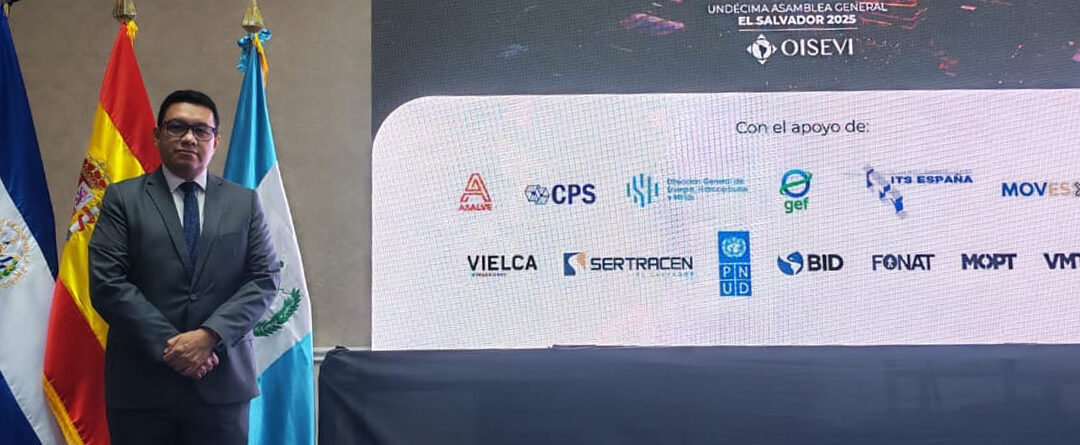
CITA participated in the XI General Assembly of the Intergovernmental Council of the Ibero-American Road Safety Programme (OISEVI), held last week from 10 to 12 November 2025 in San Salvador, El Salvador.
The event gathered high-level authorities from Ibero-American countries, together with representatives from international organizations, development banks, and key partners in road safety, including the World Bank, Inter-American Development Bank (IDB), WHO/PAHO, FIA Foundation, Fundación MAPFRE, UNITAR, and CITA, among others.
The Assembly served as a key platform for cooperation, policy harmonization, and exchange of good practices in road safety management across the Ibero-American region, aiming to advance the implementation of the UN Sustainable Development Goals (SDG 3.6) by reducing road traffic fatalities and injuries by half.
On behalf of CITA, Mr. Wilhelm Ponciano took part as a panelist in Panel 4: “Safe Vehicles, Protected Users”, held on Monday, 10 November. The session focused on the crucial role of vehicle safety standards and inspection systems in protecting all road users, highlighting how robust PTI frameworks contribute to preventing crashes and minimizing risks.
The event concluded with the approval of the OISEVI 2025–2026 Work Plan and the renewal of commitments to strengthen technical and financial cooperation mechanisms across the region.
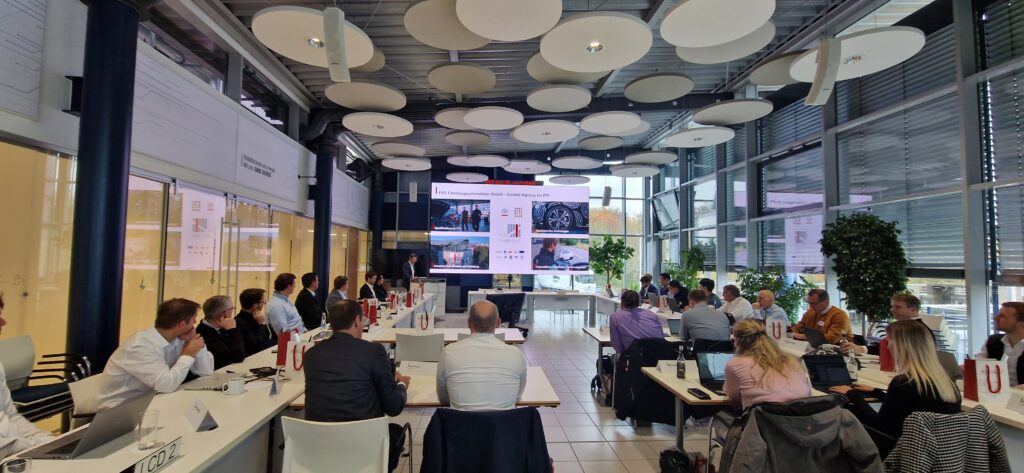
11–12 November 2025, Radeberg (Germany). The CITA ADAS Task Force convened for a two-day in-person meeting hosted by FSD Fahrzeugsystemdaten GmbH at their headquarters in Radeberg.
With representatives from Europe and abroad, the meeting focused on deepening the technical discussion on how Advanced Driver Assistance Systems (ADAS) can be effectively assessed within PTI, and on sharing the latest innovations, insights, and test concepts currently emerging across the sector.
The agenda was structured over two intensive days, combining strategic presentations, technical demonstrations, and open exchanges between the participating CITA members.
The first day opened with a welcome session and a brief introduction to the objectives of the CITA ADAS Task Force, followed by a sequence of contributions outlining the growing need for PTI-relevant ADAS assessment methods.
Key Highlights:
TRL – Collaborative Project on ADAS in PTI / TRL introduced a new collaborative initiative examining whether — and how — ADAS functions should be included in PTI. The project aims to evaluate practical, reliable, and safety-oriented methods for integration into inspection procedures, ensuring regulatory preparedness as ADAS penetration increases.
MUSTANG – New ADAS Testing Solution Concept / The MUSTANG team presented an innovative ADAS testing solution concept, designed to simplify real-world function evaluation through a structured, modular approach. The concept sparked significant discussion on technical feasibility and PTI integration.
FSD + DEKRA – Joint Presentation on Dynamic Target Evaluation & Sensor Misalignment / FSD and DEKRA provided a combined update on their ongoing research into dynamic target testing. Initial results on sensor misalignment assessment highlighted both the complexity of the topic and the potential for robust PTI-compatible methodologies.
KÜS – Updates on the KÜS Drive Concept / KÜS shared recent developments in the KÜS Drive platform, focusing on new capabilities relevant to ADAS function verification. Improvements in efficiency and reproducibility drew positive feedback from participants.
MAHA – Vehicle-in-the-Loop (VIL) ADAS Testing / MAHA presented the latest updates to its Vehicle-in-the-Loop concept, which enables ADAS function testing in a controlled but realistic environment. The approach generated interest due to its potential compatibility with existing PTI infrastructure.
The first day concluded with an open technical exchange, allowing participants to compare methodologies, identify common needs, and explore opportunities for joint development.
The second day built on the previous discussions, shifting focus toward concrete testing solutions, practical demonstrations, and the global landscape of ADAS assessment.
Key Highlights:
Rohde & Schwarz – R&S®RadEsT Radar Essential Tester & Demo / Rohde & Schwarz demonstrated their Radar Essential Tester, providing participants with a hands-on demonstration of target simulation and measurement functions. The session gave valuable insight into emerging radar testing technologies.
ÖAMTC – Analysis of ADAS Malfunction Impacts / ÖAMTC shared findings on the safety impact of malfunctions in key ADAS systems, reinforcing the need for periodic verification of critical functionalities to maintain road safety and driver trust.
KOTSA – Korea’s KADAS Assessment System / Representatives from KOTSA introduced the Korea Automated Driving Vehicle Assessment System (KADAS), providing concrete examples of national-level ADAS performance evaluation and sharing promising results and lessons learned.
DÜRR – Updates on x-proof 360 and PTI Applications / DÜRR presented the evolution of the x-proof 360 technology and its potential application in PTI contexts, highlighting precision, repeatability, and the expanding capability of automated inspection tools.
GTÜ – Concept Presentation & Live Demo / GTÜ outlined its ADAS testing concept and performed a live demonstration, delivering a practical perspective on how inspection stations might integrate ADAS checks in the future.
DEKRA – Targeted and Efficient ADAS/AD Testing in PTI / DEKRA closed the technical sessions with a proposal for a structured and efficient approach to verifying ADAS and Automated Driving (AD) functions during PTI. The concept emphasized risk-based prioritisation and the use of objective, repeatable test methods.
The meeting in Radeberg reaffirmed the commitment of CITA and its members to prepare for the safe integration of ADAS into PTI frameworks worldwide. With vehicle technologies evolving rapidly, the Task Force continues to play a central role in ensuring that inspection procedures remain relevant, effective, and aligned with real-world safety needs.
CITA extends its sincere thanks to FSD for hosting the event, to all participant organizations for their valuable contributions, and to the Task Force members for their ongoing dedication.
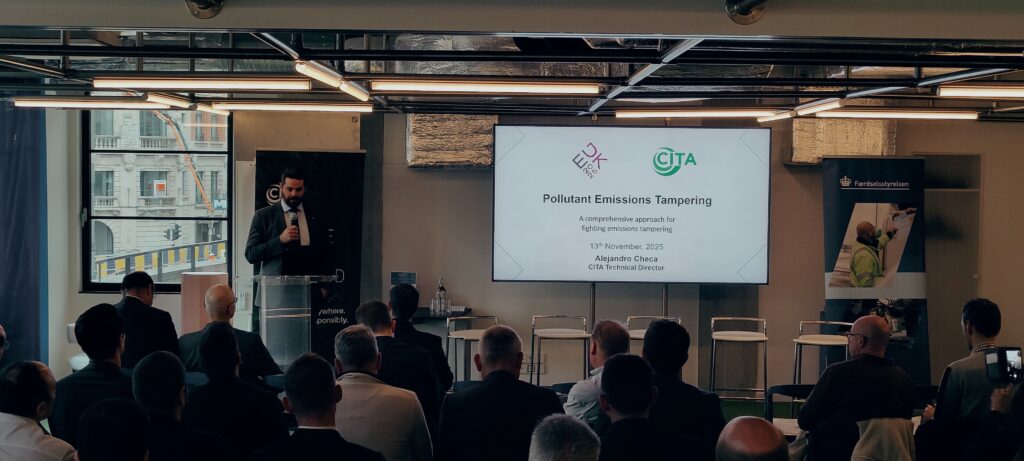
Brussels, 13 November 2025 — CITA, in collaboration with the Danish Presidency of the Council of the European Union, successfully held the conference “A Comprehensive Approach to Fighting Emissions Tampering” at SPARKS, Brussels. The event brought together representatives from European institutions, authorities, inspection bodies, and technical experts to address one of today’s most critical challenges in vehicle compliance and environmental protection: emissions tampering.
The conference opened with welcoming remarks from Gerhard Müller, President of CITA, and Stefan Jøker Søsted, Director General of the Danish Road Traffic Authority.
In his address, Gerhard Müller underscored the moral and regulatory urgency of addressing tampering: “Tampering is not a mechanical glitch—it is a human decision that undermines fairness, safety, and environmental responsibility,” he stated. “Our inspectors cannot fight blindfolded. They must have full, secure, and standardized access to vehicle data to carry out their duty in the public interest.”
He praised Denmark’s leadership in the field and highlighted the need for Europe’s revised roadworthiness framework to empower authorities through data access, transparency, and harmonized technical standards.
Stefan Søsted extended a warm welcome on behalf of the Danish Presidency, thanking CITA for its initiative and partnership. He emphasized that cooperation and innovation are essential to achieving Europe’s green and competitive goals: “By joining forces, we are sending a clear message — that transparency, accountability, and innovation must lead the way,” Søsted noted.
He introduced Denmark’s key priorities under its Presidency — promoting a secure, competitive, and green Europe — and presented the Roadworthiness Package as a major step toward improving road safety and environmental compliance. Søsted also showcased Denmark’s pioneering use of plume chasing and OBD-based roadside inspections, illustrating how targeted enforcement and advanced technology can effectively detect tampering.
Following the opening session, the conference featured a series of high-level technical presentations highlighting practical enforcement tools and new regulatory approaches:
Signe Shim and Jens Maegaard from the Danish Road Traffic Authority shared Denmark’s anti-tampering initiatives, including plume chasing, particle number measurements, and OBD data analysis. Their findings confirmed that tampered or defective vehicles can emit up to 40 times more NOx or particulates than compliant ones, demonstrating the efficiency of these inspection methods in real-world enforcement.
Herbert Woopen from Opus Inspection presented the company’s advanced remote sensing technology, now recognized as a cornerstone of the proposed EU Roadworthiness Package. He detailed how remote sensing devices can identify high emitters in real time, supporting cross-border enforcement and efficient resource allocation across the EU.
Víctor Salvachúa from Applus+ showcased Spain’s experience in periodic technical inspection (PTI) of mopeds, demonstrating how coordinated testing for light vehicles contributes to the detection of tampering and improved air quality.
Alejandro Checa, CITA Technical Director, concluded the technical segment with a comprehensive overview of tampering across vehicle systems and regulatory frameworks. He underlined that tampering detection depends on inspection capability, training, and cooperation between authorities, manufacturers, and inspectors, and that the integration of Type Approval, In-Service Conformity, PTI, and COP processes is crucial for effective enforcement.
An engaging panel discussion followed, allowing participants to exchange best practices and explore synergies between national and EU-level approaches. Speakers and attendees alike agreed on the necessity of a coordinated, data-driven strategy that bridges the gap between legislation, enforcement, and inspection.
We just released our latest NewsRelease – November 2025, a comprehensive update capturing the association’s major activities, publications, and international initiatives from the second half of the year.
In his foreword, CITA President Gerhard Müller highlights a year marked by strong regional engagement, from RAG Conferences in Latin America and Africa to high-level dialogues in Europe on the revision of the EU Roadworthiness Package. He underscores the importance of modernizing PTI systems to address electric and automated vehicles, while ensuring citizens remain informed about the role of inspection in road safety and environmental protection.
Among the key features of this edition:
New CITA Recommendation No. 27 – “Electric Vehicles: A Comprehensive Approach”
Updated CITA Recommendation No. 3 – “Relating to the Features of Measuring Instruments”
CITA White Paper on Brakes Inspection
CITA’s position on the US–EU “Mutual Recognition” of Vehicle Standards
Highlights from the 2025 RAG Conferences, Topic Area meetings, and technical workshops
Events in Santo Domingo, Zanzibar, Brussels, Oslo, and Tokyo showcased CITA’s global collaboration and innovation leadership.
The publication also introduces new CITA members, announces upcoming events—including the RAG Europe Conference and General Assembly 2026.
To provide the best experiences, we use technologies like cookies to store and/or access device information. Consenting to these technologies will allow us to process data such as browsing behaviour or unique IDs on this site. Not consenting or withdrawing consent, may adversely affect certain features and functions.
Functional
Always active
The technical storage or access is strictly necessary for the legitimate purpose of enabling the use of a specific service explicitly requested by the subscriber or user, or for the sole purpose of carrying out the transmission of a communication over an electronic communications network.
Preferences
The technical storage or access is necessary for the legitimate purpose of storing preferences that are not requested by the subscriber or user.
Statistics
The technical storage or access that is used exclusively for statistical purposes.The technical storage or access that is used exclusively for anonymous statistical purposes. Without a subpoena, voluntary compliance on the part of your Internet Service Provider, or additional records from a third party, information stored or retrieved for this purpose alone cannot usually be used to identify you.
Marketing
The technical storage or access is required to create user profiles to send advertising, or to track the user on a website or across several websites for similar marketing purposes.
To provide the best experiences, we use technologies like cookies to store and/or access device information. Consenting to these technologies will allow us to process data such as browsing behaviour or unique IDs on this site. Not consenting or withdrawing consent, may adversely affect certain features and functions.
Functional
Always active
The technical storage or access is strictly necessary for the legitimate purpose of enabling the use of a specific service explicitly requested by the subscriber or user, or for the sole purpose of carrying out the transmission of a communication over an electronic communications network.
Preferences
The technical storage or access is necessary for the legitimate purpose of storing preferences that are not requested by the subscriber or user.
Statistics
The technical storage or access that is used exclusively for statistical purposes.The technical storage or access that is used exclusively for anonymous statistical purposes. Without a subpoena, voluntary compliance on the part of your Internet Service Provider, or additional records from a third party, information stored or retrieved for this purpose alone cannot usually be used to identify you.
Marketing
The technical storage or access is required to create user profiles to send advertising, or to track the user on a website or across several websites for similar marketing purposes.